


LAYER 01
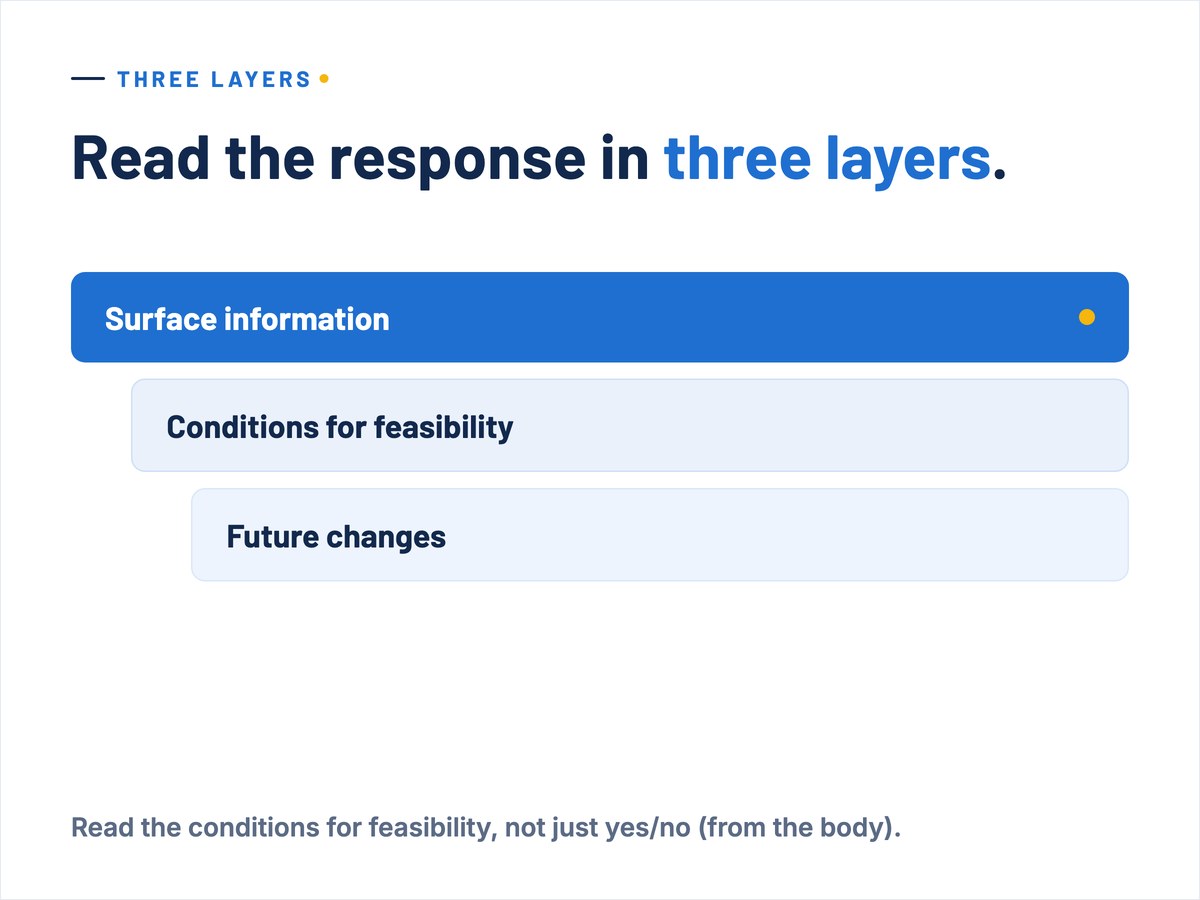
Surface information
- Whether connection is possible
- Approximate construction cost
- Expected construction period

Creating success in grid-scale battery storage, together.
GRID CONNECTION DUE DILIGENCE
Before you buy, sell or entrust a grid-scale battery storage (BESS) site, we set out the points to check for reading the construction cost, construction period, conditions and applicant-side measures in the reply to the connection study together.
* The assessment is a preliminary review based on the documents we receive and public information. It does not guarantee whether connection is possible or any revenue.

CONCLUSION
The reply to the connection study is a document that shows, based on the conditions at the time of application, the connection method, the works needed, the approximate cost, the construction period, the measures required of the applicant and more.
Even if it says “connection possible”, the conditions may change with the detailed study after the contract application, the grid situation, the circumstances of the site or changes to the application. That is why the first thing to look at is not just the conclusion field, but the whole response, including the conditions field, the notes and the applicant-side measures.
6 CHECKPOINTS
Rather than only reading from top to bottom, cross-check the cost, construction period and conditions against each other.
Check whether the response can still be used for procedures and whether the assumptions have changed.
Check the conditions attached to “possible”, the connection point, the grid classification and the conditions for applying non-firm connection and the like.
In addition to the total, the breakdown and the scope covered, check whether the developer’s own equipment or land works are included.
Read the assumptions behind the period, such as the starting point, coordination of grid outages for the works, land negotiations and payment conditions.
Check additional requirements such as protection devices, voltage measures, communications, metering and operational control.
Check through to the conditions for a re-study, the factors that can change the cost and construction period, confidentiality obligations and the next procedures.

Sources checked: Organization for Cross-regional Coordination of Transmission Operators (OCCTO), "Grid Access Process for Power Generation Facilities" (in Japanese), and the response formats of the general transmission and distribution operators. Give priority to your individual response.
HOW TO READ
Separating out not only the amounts and dates on the surface but also the conditions and future changes reduces oversights.
LAYER 01
LAYER 02
LAYER 03
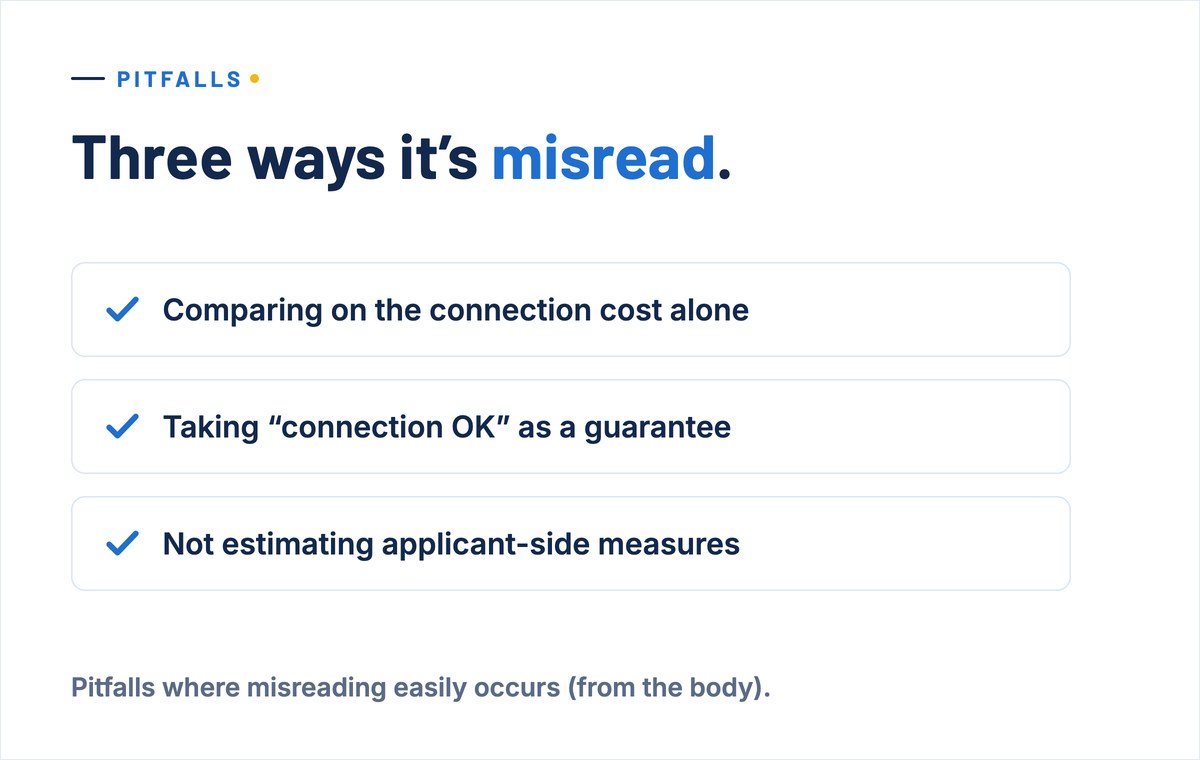
COMMON MISREADINGS
Compare on the total project cost, including equipment outside the response, grading, design, testing and operating constraints.
The conditions are fixed only after the subsequent procedures, such as the contract application, the detailed study and the grid connection construction cost agreement.
Conditions on voltage, protection, communications, metering, control and so on affect not only equipment costs but also the site and the construction period.
KEY TERMS
Systems, the grid and response formats are updated and differ by region, so check what each entry means and who bears the cost.
TERM 01
An entry that may relate to the assumptions for charging, metering, wheeling and the like. Check the conditions of application and the impact on the project’s finances individually.
See the detailed points to check ↗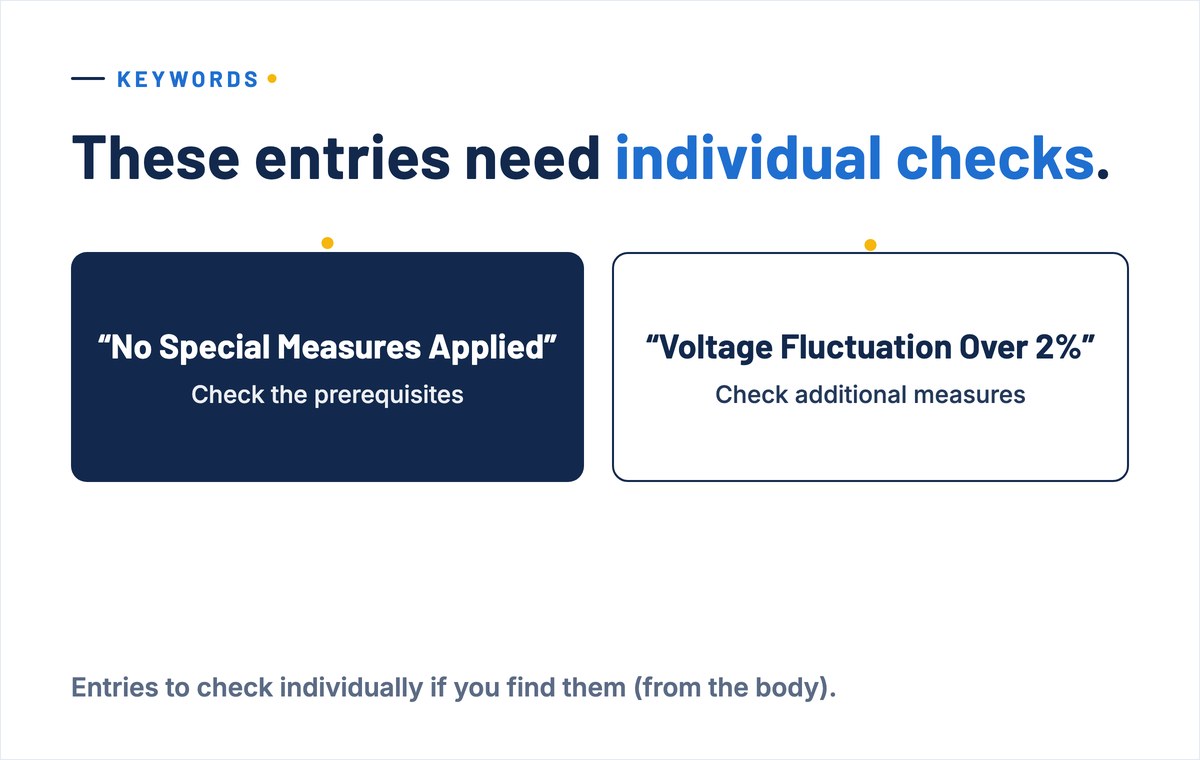
TERM 02
An entry that may lead to looking at additional equipment or operating conditions. Check the measures, how the costs are split and the impact on the construction period.
See the detailed points to check ↗* The above are examples of terms to watch out for. Do not decide yes or no from the entry alone; give priority to the main text of the response, the attached conditions and checks with the general T&D operator.
BEFORE PURCHASE / BEFORE SALE
Based on the response, maps and site documents, we sort out gaps in the checks, additional documents and site-side risks.
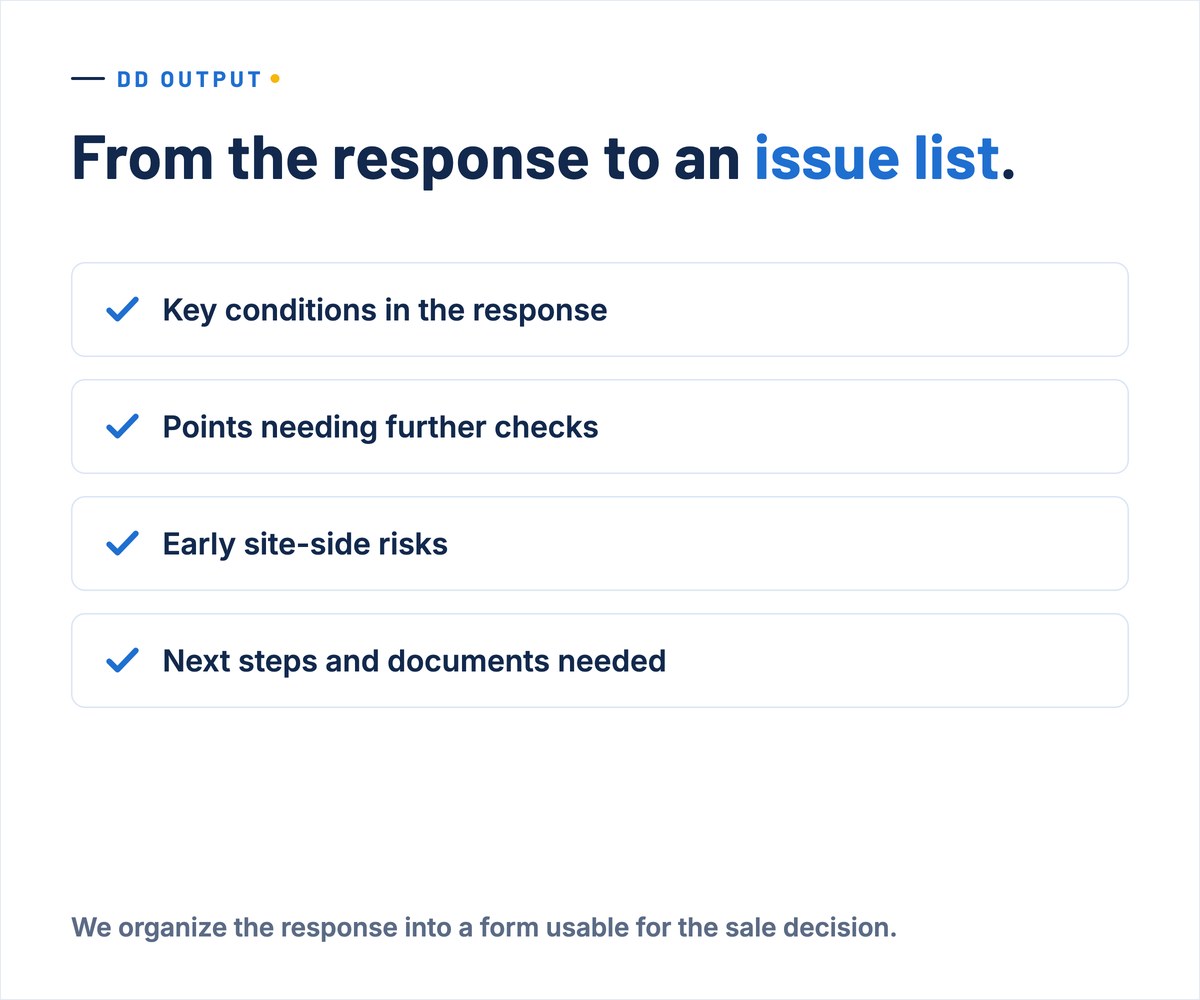
REVIX PRE-CHECK
We list the construction cost, construction period, connection method, applicant-side measures and change conditions.
We sort out unclear entries, costs outside the response and points to check with the general T&D operator.
We check hazards, road frontage, boundaries, noise, laws and regulations, cultural properties and more on the basis of public information.
We make clear the additional documents to collect and the order for moving on to consultation, application and on-site checks.
* At a stage that does not involve an on-site survey or inquiries to the general T&D operator, this is a rough review based on desk research and public information.
DOCUMENTS & FLOW
You can consult us even if you do not have them all. We will make clear which documents are still missing.
Share the response and site documents you have at this point.
We cross-check the conditions in the response against public information.
We sort out the items for further checks and the points to note for the business decision.
We guide you on how to proceed, such as sale, entrustment or continuing to consider.
FAQ
Conditions differ between individual responses. Where you are unsure, check each document.
No. The reply to the connection study is the result of a study based on the conditions at the time of application, and is not a document that commits to grid connection itself. The works, cost, construction period and required measures may change through the detailed study after the contract application or changes in the grid situation.
Check in this order: the response date and validity period, whether connection is possible and the conditions, the grid connection construction cost, the expected construction period, the measures required of the applicant, and the notes and assumptions. It is important to read not only the amounts but also, at the same time, the conditions that require additional work on the developer’s side.
Not necessarily. You need to recheck the total project cost and the revenue assumptions, including equipment measures needed outside the response, operating constraints, land-side works and the risk of changes to the application.
Because they can affect the assumptions for the project’s finances and additional equipment, do not decide only on whether the entry is there; check the conditions of application, the equipment needed, the cost sharing and the operating conditions with the general transmission and distribution operator or a specialist. Systems and individual responses are updated and differ from one another, so check the latest information.
Yes. We can sort out the initial issues from the documents available at this point, such as the location, lot number, land documents, and road frontage and boundary information. However, procedures such as a connection study and a contract application are needed to decide the final connection conditions.
We sort out the key conditions in the response, items that need further checks, site-side issues such as hazards, road frontage and noise, and the documents to collect next. The results are a preliminary review based on public information and the documents we receive, and do not guarantee whether connection is possible or the project’s revenue.
The response may carry notes that restrict confidential information or use for other purposes. Before sharing it for a sale or purchase, brokerage or DD, check the notes in the document, the applicant’s consent and whether confidentiality is required.
LAND DUE DILIGENCE
We separate the grid conditions from the site conditions and sort out the issues to check next.
You can consult us even before you have the response or while some documents are missing.