


There are several markets, and the differences are hard to see
What is paid for, and over what time frame, differs by market: kW, kWh, balancing capacity and more.

Creating success in grid-scale battery storage, together.
For corporate investors and operators
Rather than relying on a single market price, we design revenue opportunities by combining 3 power markets. With an estimate that includes operating conditions, costs and risks, you can judge whether the project is viable.
Revenue and yield move with market conditions and the terms of each project, and are not a guarantee of future results.

What this page covers
WHY IT IS DIFFICULT
High-voltage grid-scale battery storage is not simply equipment for selling electricity. Only when the commitments to each market, the availability of the equipment, SOC and operating costs are managed together can revenue opportunities be turned into a business plan.
What is paid for, and over what time frame, differs by market: kW, kWh, balancing capacity and more.
Operating opportunities have to be allocated while honouring the supply capacity already promised, SOC and the response conditions.
Beyond the equipment price, the utilisation rate and the continuity of operation decide long-term viability.
THREE REVENUE SOURCES
The 3 markets do not trade the same thing. They combine different kinds of value: "balancing capacity now", "supply capacity for the future" and "the price spread in electricity".
The detailed workings, participation requirements and points to watch for each market are covered on the dedicated pages under "What is grid-scale battery storage". This page focuses on how the revenue of a high-voltage BESS is put together.
A market that pays for the "ability to adjust" that keeps the grid stable.
See how it works Medium to long termCapacity marketA mechanism that secures the "ability to supply" in the future and pays for it.
See how it works Day-ahead and same dayWholesale power market (JEPX)A market where charging and discharging turn the price spread between time slots into a revenue opportunity.
See how it worksHow the 3 power markets differ and how they combineThe value, time frame and checkpoints of each are explained on the dedicated page
Read the market guide →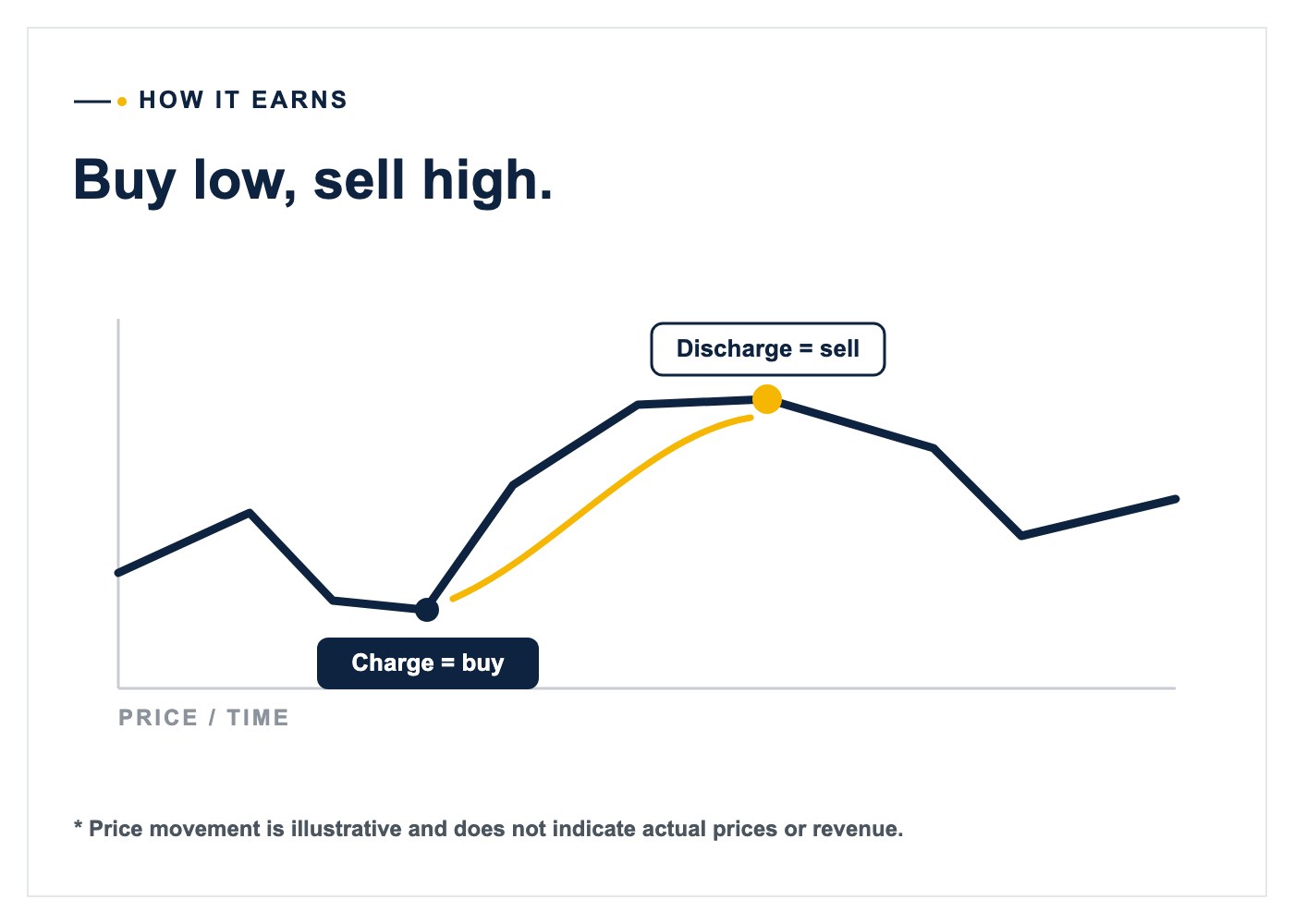
24-HOUR OPERATION
Instead of running the 24 hours on a fixed pattern, the system is operated while watching the bids accepted, dispatch instructions, prices, SOC and the state of the equipment, so that the next opportunity is not lost.
Confirm accepted bids, prices, delivery obligations and grid conditions.
Set priorities without committing the same capacity twice.
Control within the response requirements and the SOC range.
Review settlement, degradation, downtime and lost opportunities.
The figure below is conceptual. Actual operating hours and capacity allocation differ by project.
BUSINESS ECONOMICS
The total of market income is not enough for an investment decision. We deduct the electricity needed for charging, operation, maintenance, losses, financing and more, and also check the effect of downtime.
We set assumptions that differ by market: the volume of bids accepted, clearing prices, dispatch, capacity payments, price spreads and more.
We sort out the equipment cost, grid connection cost, charging cost, conversion losses, maintenance, the aggregator, insurance, replacement cost and more.
We vary market prices, the share of bids accepted, the utilisation rate, degradation, interest rates and more, and also check the conditions under which the economics break down.
AVAILABILITY
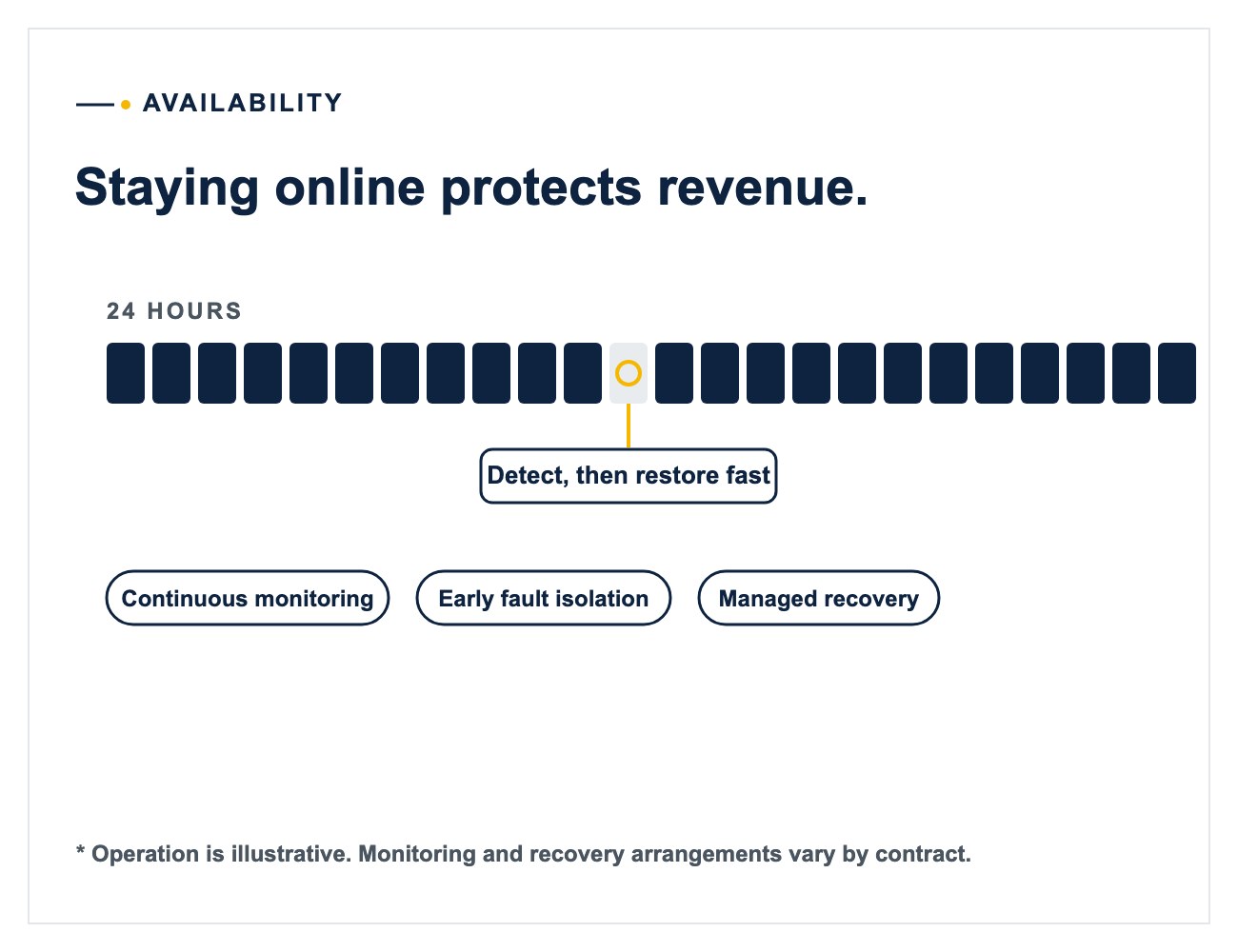
Hours in which the system cannot deliver to the market can mean fewer revenue opportunities, or a commitment left unmet. That is why availability has to be designed in, not only through the equipment specifications but through monitoring, maintenance and recovery.
REVENUE SIMULATION
You can consult us even while the candidate site, grid conditions, planned equipment and operating policy are still undecided.
REVIX SUPPORT
We check the market, the equipment, the grid, operation and maintenance together, not separately, and sort out any gaps in the assumptions at an early stage.
We sort out the target markets, market product categories, the aggregator and the approach to capacity allocation.
We align output, capacity, PCS, EMS, communications and the substation and connection equipment with the operating requirements.
We check the monitoring, inspection, fault response and recovery structure needed to keep the system available.
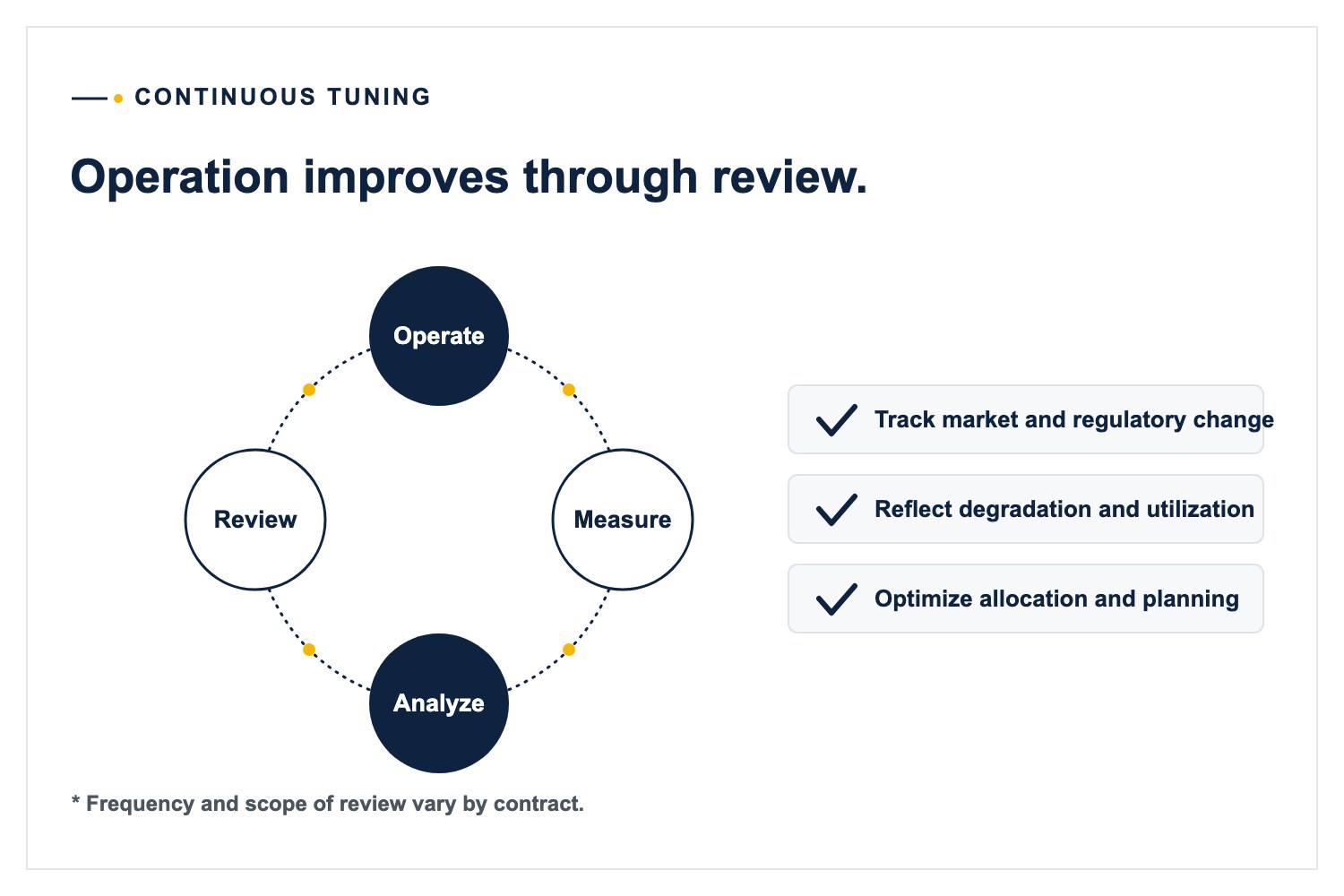
We feed changes in the rules, the markets and the actual results back into the revenue assumptions and update the operating policy.
What we check in the first consultation
RISK & CONTROL
Market revenue is not fixed. For the investment decision we make clear in advance which changes the project is vulnerable to, and which measures limit their effect.
Market prices, procurement policy, product requirements and settlement rules can change, and the expected income can move with them.
Downtime or a drop in performance reduces the capacity that can be offered, leading to lost opportunities and the risk of unmet commitments.
Even when a market opportunity is there, SOC or the capacity already promised may keep the system from taking part.
Whether connection is possible, the construction cost, the schedule, the permits, interest rates and more can all change from the initial plan.
DECISION CHECK
Whether installation, delivery, permits and connection can be achieved.
Output, capacity, efficiency, degradation, communications and control requirements.
Target markets, products, the aggregator and the bidding policy.
SOC management, monitoring, downtime, recovery and maintenance costs.
Equipment and grid connection costs, financing, tax, and the policy on sale and exit.
SIMULATION FLOW
We confirm the candidate site, the connection status, the system size and the investment policy.
We set assumptions for the markets, accepted bids, prices, utilisation rate, costs, degradation and so on.
We check the cash flow and the downside conditions across several scenarios.
We turn it into a schedule of further surveys, quotations, the project structure and the investment decision.
FAQ
Mainly 3 markets are involved: the balancing market, the capacity market and the wholesale power market (JEPX). Whether a project can actually take part, and how its revenue is made up, depend on the equipment specifications, the connection conditions, the operating policy of the aggregator, the market rules and more.
Combining markets is possible, but the same capacity cannot be promised twice for the same time slot. The operation has to be designed so that SOC, response requirements, bidding conditions and the supply capacity secured all fit together.
No. The result moves with clearing prices, the share of bids accepted, how often the system is dispatched, the price of the electricity procured, equipment downtime, degradation, regulatory change, financing terms and more. REVIX JAPAN prepares a revenue estimate on several sets of assumptions so that you have a basis for your decision.
Not only the equipment cost but also charging electricity, conversion losses, aggregator fees, O&M, communications and market connection fees, repair and replacement, insurance and financing costs. The tax and accounting treatment needs to be confirmed with a specialist.
While the system is down there are fewer chances to deliver to the market, and a shortfall after a bid is accepted or an unplanned outage can affect the project economics. That is why equipment selection, monitoring, maintenance and a recovery structure built around availability matter.
For each project we check the area needed, the delivery route, noise, fire and development permits, grid connection, substation and connection equipment and more. Rather than judging by the site alone, an initial study that includes the connection review and the permits is needed.
Changes to product requirements, procurement volumes, price rules, settlement methods and so on can change the business plan. It is important not to depend on a single market or a single price assumption, and to review the operating policy and the revenue assumptions regularly.
We compare the markets covered, the bidding and operating record, the control logic, the revenue split, the minimum term, the penalty terms, the scope of data provided, the response to faults and more. It is important to study this at the same time as the equipment design, including compatibility with the equipment and the EMS and where responsibility is divided. * Whether a particular operator can be used, and on what terms, changes with the project and the timing.
START WITH CONDITIONS
Even before the project information is complete, we sort out the surveys, documents and order of decisions you will need.
* Depending on what you ask, further surveys or confirmation by a specialist may be needed.
