


A study range starting with equipment from 12.5 million yen
It is easier to compare options in smaller units than with large projects, and you can plan combinations that fit your investment policy.

Creating success in grid-scale battery storage, together.
Low-voltage BESS | For investors and business partners
We check how revenue works, the assumed conditions, the risks and the operating structure one by one, and estimate the potential of a low-voltage battery investment for your individual case.
* The figures shown are estimates based on certain assumptions and do not guarantee revenue or yield. They vary with the equipment specifications, grid connection, construction costs, market prices, availability, operating costs and other factors.

The price and expected yield (not guaranteed) on this page are estimates for the GoodWe 49.9 kW / 100 kWh Package. The price and expected yield of the new product RENON 49.9kW / 133kWh are shown on the RENON page.
The starting point for an investment decision is to check not just the yield figure but the conditions under which that figure holds.
Before investing
In a low-voltage battery investment, you need to check the source of revenue, the operation of the equipment, grid connection, maintenance and the exit as one business.
We break down the estimate conditions and check them: market unit prices, availability, equipment costs, operating costs, insurance and tax, and so on.
The land conditions and the utility’s connection conditions decide whether a project goes ahead. Each candidate site needs to be checked.
We check monitoring, maintenance, warranty, insurance and the scope of response during downtime before the contract, and reflect them in the income and expenses.
Investment highlights
We combine the ease of keeping each project small with the idea of distributed placement, and study the design of the projects as a whole.
It is easier to compare options in smaller units than with large projects, and you can plan combinations that fit your investment policy.
Designs that widen the choice of candidate sites, such as part of an existing facility or a solar power plant, are possible.
We study the use of the markets according to the operating policy, such as grid balancing and power trading.
We check not only the equipment but also the site, grid connection, construction, aggregation and maintenance as one continuous process.
Revenue mechanism
Unlike a home battery, it is assumed to connect to the grid and be used in the power markets through operation by an aggregator or similar.
An operating plan is built based on power shortages and surpluses and on market prices.
The battery charges, discharges and stands by to respond, in line with the condition of the equipment and the market requirements.
Income and expenses are checked by deducting operating and maintenance costs from revenue from balancing, wholesale power and other sources.
Simulation
This is a reference model with equipment from 12.5 million yen. The figures shown are a guide for the start of your study. A formal investment decision needs an individual estimate that reflects the costs and revenue conditions of the specific project.
Low-Voltage Simulator (main page)Estimates with your assumptions entered, sensitivity analysis and the way to the cost breakdown are all gathered here
Estimate with your own conditions →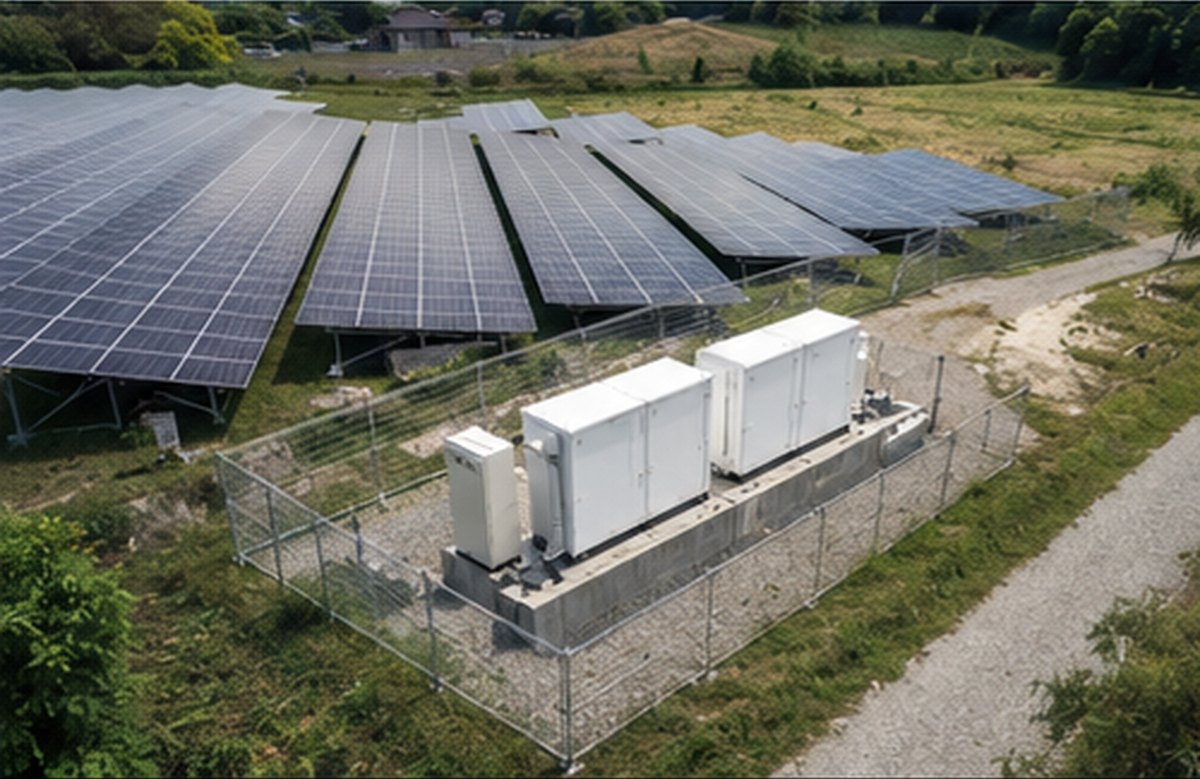
Site strategy
Making use of the compact size of low-voltage equipment, we study distributed project formation that does not depend on a single large site.
We check the area needed, delivery access, noise, clearances, ownership and connection conditions.
We compare the reduced generation income with land rent and other income, and check whether it makes sense for the owner.
We spread the region, connection timing and equipment condition, and keep track of where each project is skewed.
Risk & control
We sort out the main items to check before an investment decision and reflect them in the estimate, the contract and operation.
Allowing for price falls and changes to participation requirements, we check income and expenses that do not rely on a single scenario.
We check how whether connection is possible, the grid connection construction cost, the timing of the utility’s response and construction delays affect the start of the business.
We factor faults, communication failures, output restrictions and maintenance shutdowns into the revenue estimate.
We check capacity degradation, replacement costs, warranty terms and the parts supply period.
We check land rights, hazards, the delivery route, noise and the distance to nearby facilities.
Before the contract, we sort out transfer restrictions, termination terms, equipment removal and the possibility of a sale.
START WITH THE ASSUMPTIONS
We ask about your investment policy, preferred scale, whether you have a candidate site and the holding period, and sort out the points to check and the information needed for an estimate.

Process
We gather the information for decisions at an early stage and check the viability of the project step by step.
Share your investment policy, budget and whether you have a candidate site.
Check the assumed scheme and the main conditions.
Sort out costs, revenue, sensitivity and the payback outlook.
Check the site, grid connection, equipment and contract risks.
Once the terms are fixed, move on to procurement, applications and construction.
Check the operating status and revenue, and improve operation.
Decision checklist
It is fine if they are not settled yet. Please share your study conditions as far as you know them.
We sort out the scale you have in mind: a single project, several projects, a joint investment and so on.
We check your priorities: long-term holding, selling partway, business transfer and so on.
Share land you own, existing solar, sites of partner companies and so on.
We check how you view market fluctuations, the construction period, availability and the payback period.
We sort out the documents needed for internal approval, an investment committee and explanations to financial institutions.
FAQ
We have gathered the questions we often receive at the early stage of an investment decision.
No, it is not guaranteed. It is an estimated figure that varies with assumptions such as market prices, availability, operating costs and connection conditions. For an individual project, please check a revenue estimate with its assumptions clearly stated.
The amount shown is a guide for the start of your study. The scope of the equipment configuration, grading, grid connection, grid connection construction cost, insurance, maintenance and so on differs by project, so it is confirmed in a formal quotation.
Use in the balancing market, the wholesale power market and others is assumed, but the way of taking part and the revenue mix differ with the rules, the aggregator and the operating policy.
Yes, you can. Depending on the status of the project and the offering terms, we explain how to think about candidate sites and the items to check. We do not guarantee that a site will be secured.
It is important to check in advance the downtime, repair costs, warranty scope, insurance and alternative arrangements, and to set availability and maintenance costs conservatively in the revenue estimate.
It depends on the contract structure and the business scheme. Please check the options, such as transferring your equity interest, selling the equipment or continuing to hold it, and their constraints before signing the contract.
There is no obligation to sign a contract at the stage of requesting materials or the first consultation. Please start by checking the assumptions and the study process.
NEXT STEP
We give you the revenue estimate, the project overview and the documents needed all together. You can consult us at an early stage of your study, even if your candidate site is not yet decided.