START SMALL
Easy to start with 49.9kW / 100kWh
A standard package for low voltage. Capacity can be expanded in 100kWh units to suit the project.

Creating success in grid-scale battery storage, together.
LOW-VOLTAGE BESS / INVESTOR
For Investors & Business Partners
Not only how revenue builds up, but also the assumptions and the downside factors are made visible. We sort out the figures needed for an investment decision to match the conditions of each project.
* The figures shown are assumed values based on set conditions and do not guarantee future revenue.
CHECK POINT
NEW | RENON
A new low-voltage grid-scale battery storage product. The expected yield (not guaranteed) and the revenue simulation for RENON are shown on the RENON page.

* The price and expected yield (not guaranteed) are reference values based on our estimates (pre-tax). They vary with the market environment and operating conditions and do not guarantee future revenue. The sales price does not include the grid connection construction cost, transport costs or the land price.
BATTERY SYSTEM
The simulator below is an estimate for the GoodWe 49.9 kW / 100 kWh Package (not an estimate for RENON). It assumes the use of the GoodWe ESA series industrial battery storage system (a 50kW hybrid power conditioner set to 49.9kW + a 100kWh battery + a communication unit).

START SMALL
A standard package for low voltage. Capacity can be expanded in 100kWh units to suit the project.
SPACE
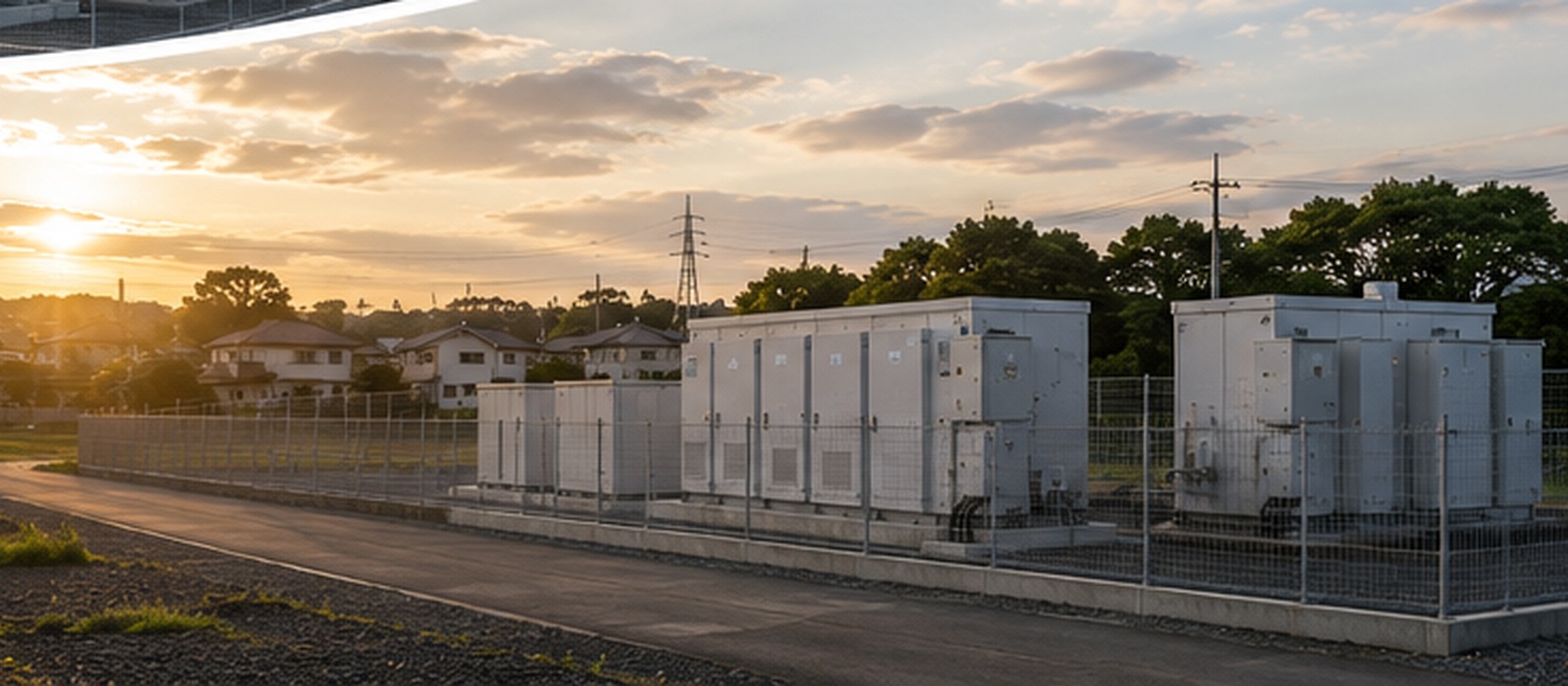
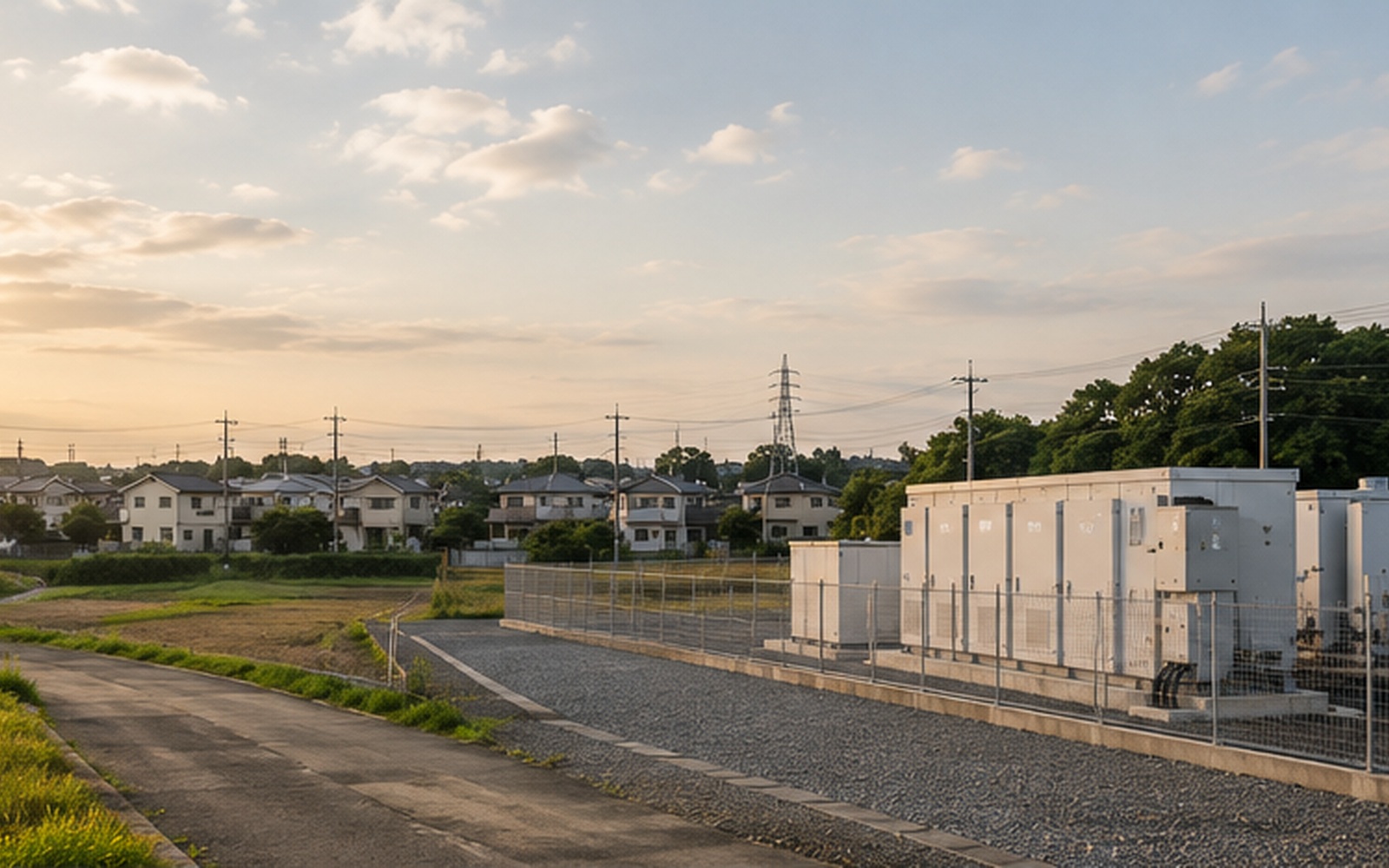
A compact design in an integrated cabinet. We can make proposals from small sites of about 6 tsubo, such as idle land or the area around buildings.
OPERATION
With the communication unit and EMS integration, several sites are operated as a distributed low-voltage BESS. We aim for market operation with cooperation with an aggregator in view.
QUALITY
6,000 cycles and 96% charge and discharge efficiency. Outdoor specification (IP55), with built-in fire extinguishing equipment.
See the GoodWe 49.9 kW / 100 kWh Package page →
* Product specifications and warranty terms differ with the contract. For details, see the GoodWe 49.9 kW / 100 kWh Package page.
REVENUE SIMULATOR
Choose an equipment plan, then enter the design, equipment and construction cost and the land conditions to calculate the yield.
Low-Voltage SimulatorRevenue estimates for 49.9kW / 100–200kWh by warranty planEstimated for the TEPCO service areaCalculated with conservative assumed unit prices of Type A 3.28 yen and Type B 6.40 yen (both per ΔkW per 30 minutes)
RESULT
Estimate based on your input conditions
SENSITIVITY
Updates with your inputs
A formal revenue estimate also reflects the project conditions and downside scenarios.
Please share the land, grid connection, equipment and financing conditions as far as you know them.
Before the estimate, you can also check what the price includes / how to think about downside factors.
FAQ
No, it is not guaranteed. It varies with market prices, availability, operating costs, equipment conditions, grid connection conditions, tax and financing conditions and other factors. Around 19% is an assumed value based on set assumptions, such as acquiring the land by purchase, and we re-estimate it for each individual project.
We mainly combine operating opportunities in markets such as the balancing market and the wholesale power market. The markets you can take part in, the revenue mix and the operating method differ with the rules, the equipment specifications and the aggregator conditions.
The simple estimate on this page calculates the simple yield and the simple payback period from the annual sales and annual operating costs entered. A formal estimate reflects tax, loans, the cost of electricity for charging, electricity-related costs such as wheeling charges and the renewable energy surcharge, depreciable asset tax, unit prices by market, connection conditions and more. Charge and discharge conversion efficiency and degradation over time are not taken into account in the current estimate model, so they are checked separately as downside factors.
While the system is down, there are fewer opportunities to take part in the market, and revenue is affected. When estimating, we check availability, the maintenance structure, parts supply, the recovery period and the scope of insurance cover, and also prepare a downside scenario.
Whether the equipment or the business can be transferred depends on the contracts, the land rights, the grid connection contract, the aggregation contract, the condition of the equipment and other factors. Before installation, it is important to sort this out individually, including the holding period and the exit policy.
START WITH YOUR CONDITIONS
Why not start from an individual estimate that shows the conditions and risks, rather than a yield with vague assumptions?
It is fine if what you want to discuss is not yet decided. We sort out the assumptions from what is known.