


Is it enough to compare on equipment price?
Compare on the total project cost and the scope of responsibility, including grid connection, civil works, substation, communications and maintenance.

Creating success in grid-scale battery storage, together.
HIGH-VOLTAGE GRID-SCALE BESS
A new business asset in the power infrastructure: it stores electricity and sends it out at the moment it is needed. This page sorts out, one by one, how it differs from low-voltage, its role in the markets, and the points that decide whether to go ahead.
THREE KEYS
01 / DEFINITION
Charge when there is a surplus, discharge when it is needed. That fast control capability is what it provides to the power grid and the markets.
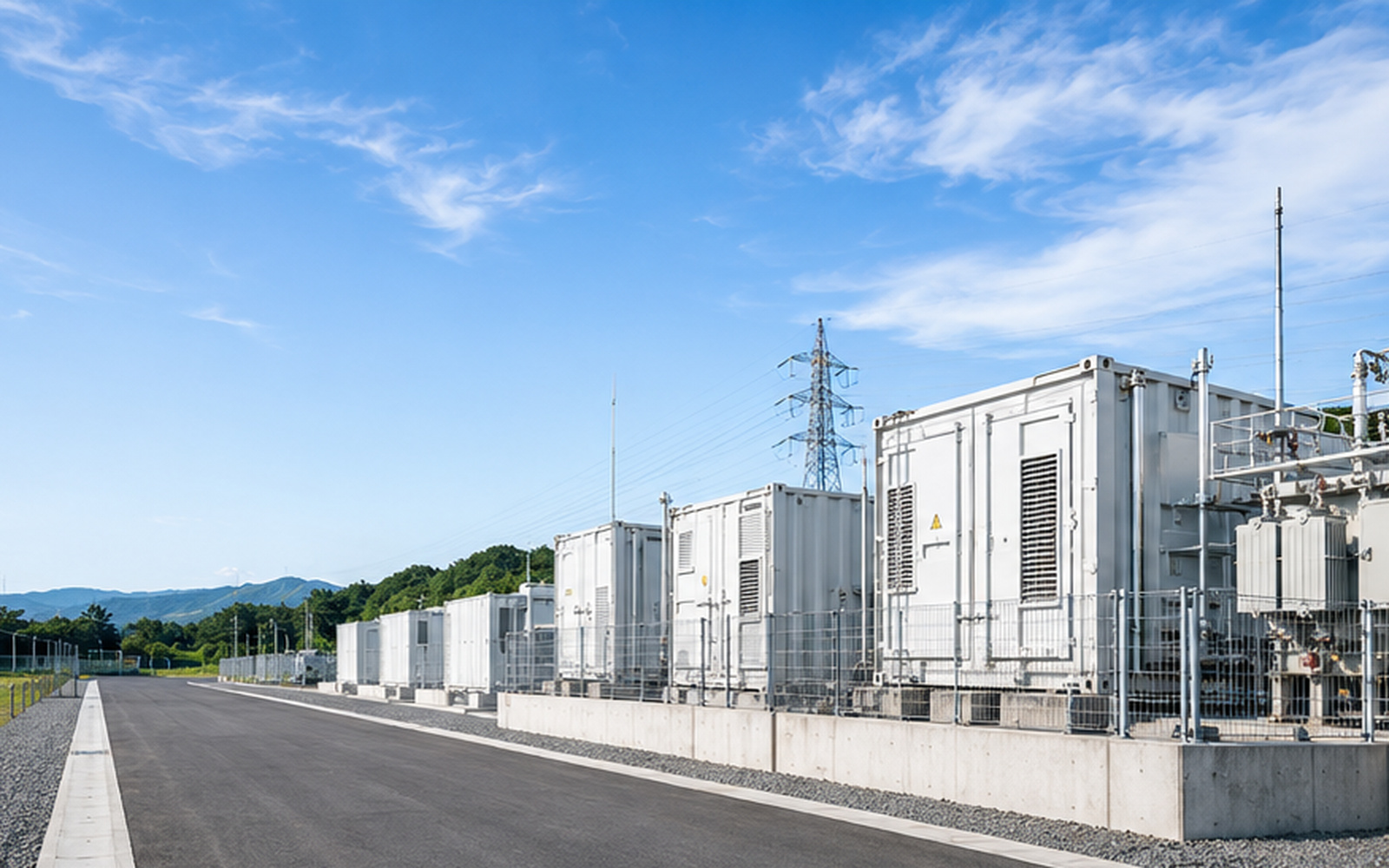
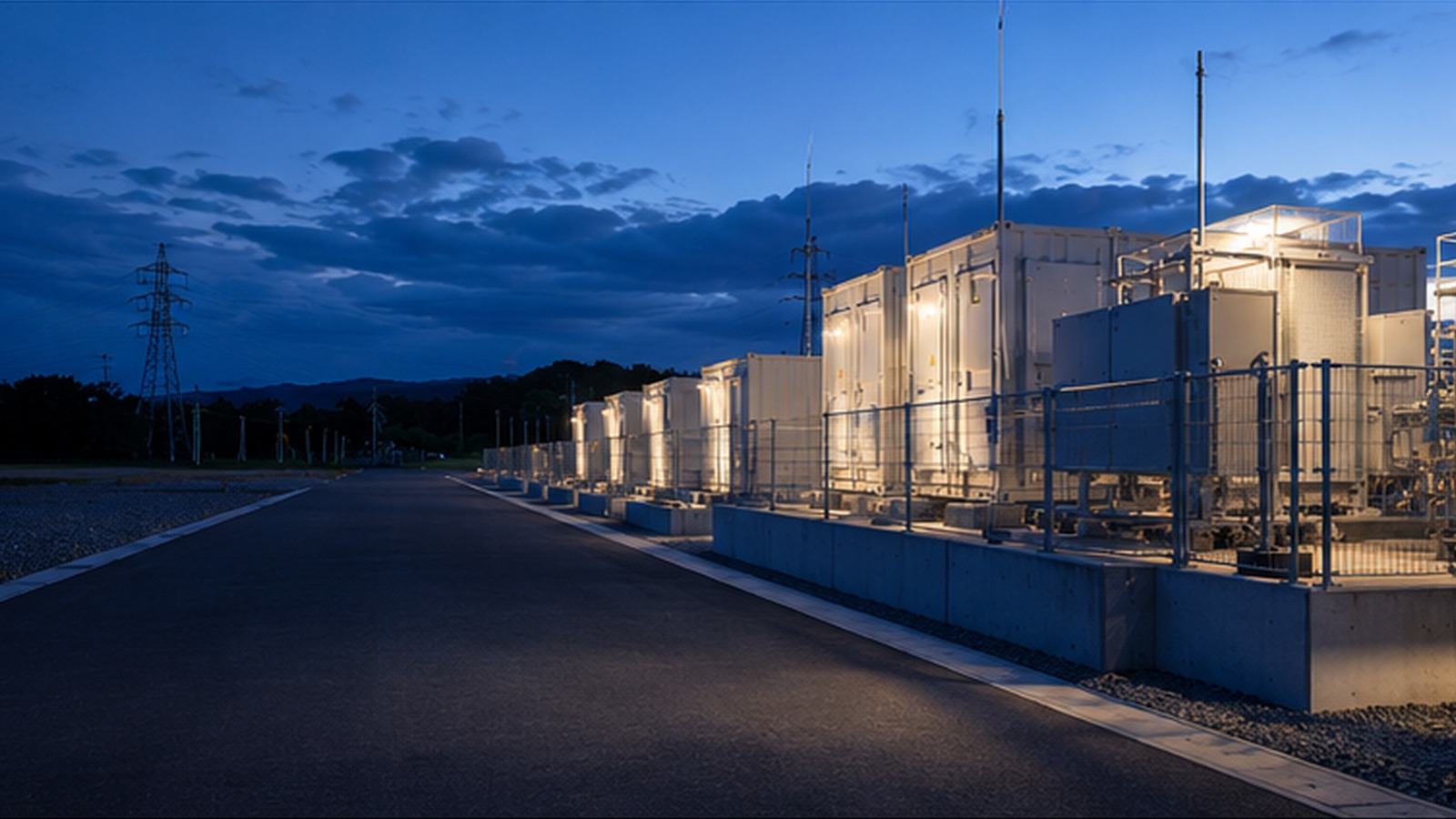
On this page, following the way the REVIX JAPAN site is organized, we call commercial grid-scale battery storage that connects on the high-voltage side "high-voltage grid-scale battery storage". It is designed as one equipment system that includes not only the battery containers but also the PCS, transformers, substation equipment, protection devices, and the monitoring and control system.
* The actual connection voltage, output, capacity and equipment configuration differ from project to project.
Compare on the total project cost and the scope of responsibility, including grid connection, civil works, substation, communications and maintenance.
Check not only equipment performance but also the product requirements, communications, aggregation and the operating plan.
Sort out degradation, downtime, parts supply, cyber security measures and the recovery structure before the contract is signed.
02 / SCALE & SYSTEM
The larger the equipment, the more issues there are around grid connection, substation equipment, protection coordination, consultations with the fire service and local government, construction and maintenance. You need to design the whole business as one system.
| Item | Low-voltage grid-scale battery storage | High-voltage grid-scale battery storage |
|---|---|---|
| Business scale | Relatively compact equipment configuration | Larger equipment configuration, such as container type |
| Connection and substation | Check the connection conditions on the low-voltage side | Designed to include high-voltage substation equipment, transformers, protection devices and more |
| Candidate site | Small sites can also be considered | Site planning that covers equipment layout, clearances, delivery and maintenance access |
| Design and consultation | Many areas are easy to standardize | More individual coordination on grid, fire service, local government, civil works and communications |
| Operation | Integrated operation of a fleet of systems may be assumed | Response, monitoring and maintenance structure designed individually to the market requirements |
* The comparison sorts out general points to consider. The voltage class, connection conditions and regulatory treatment have to be checked individually against the equipment specifications and the connection point.
03 / THREE MARKETS
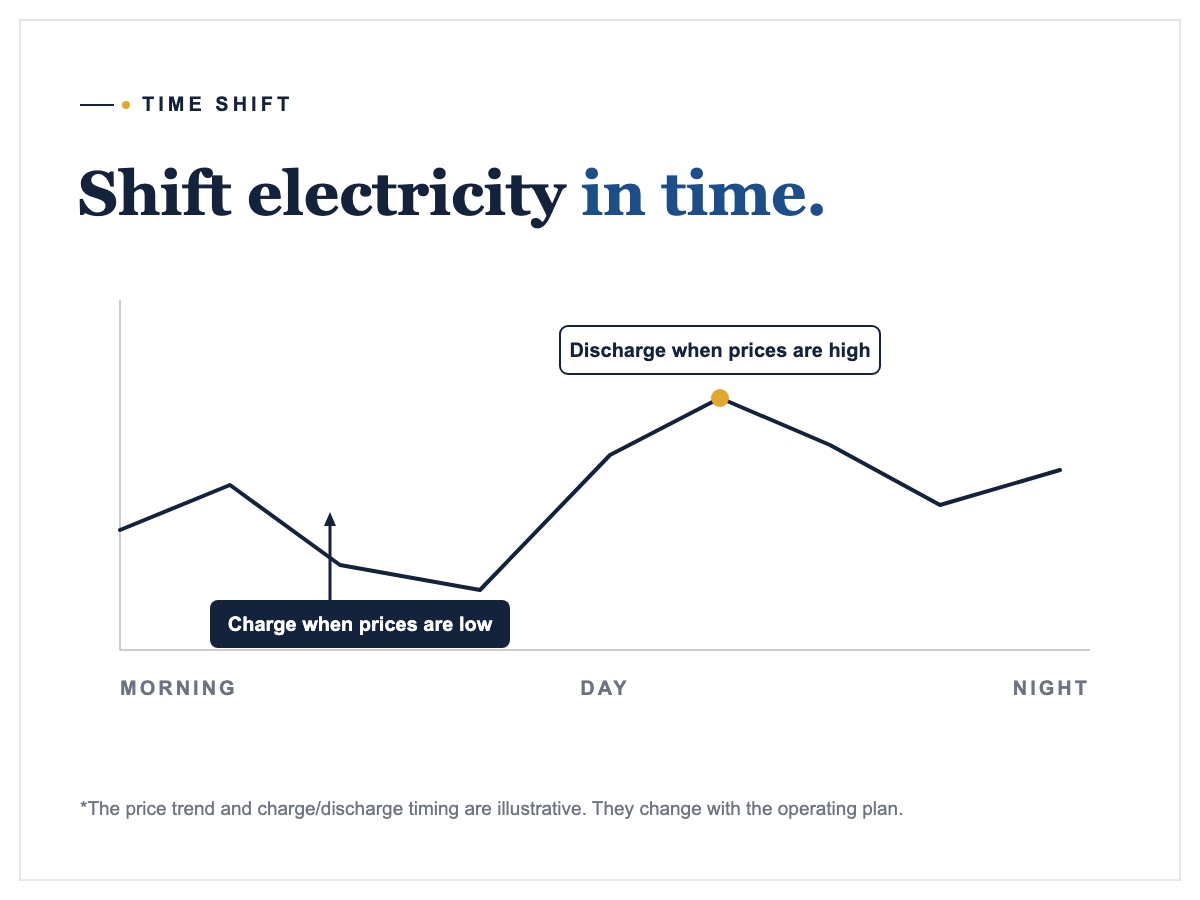
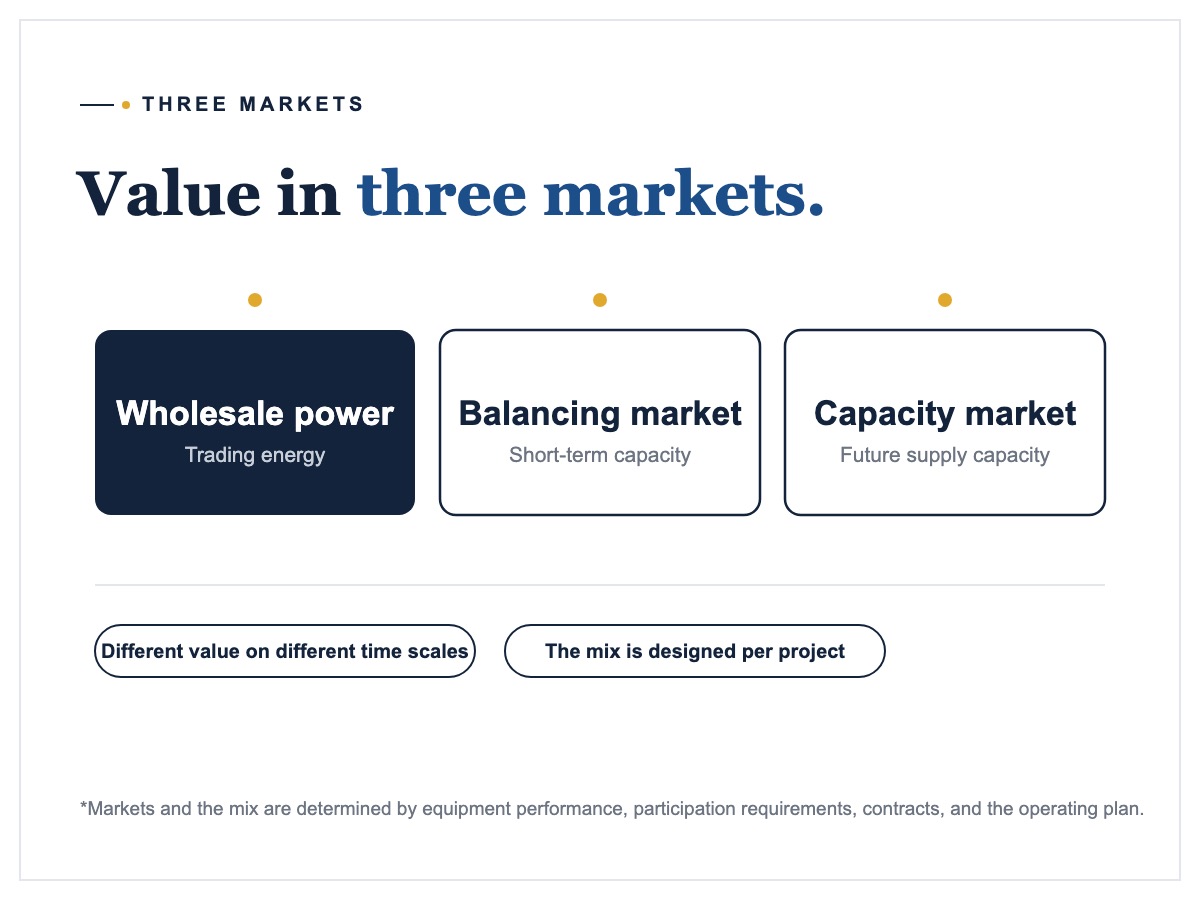
The same battery system can provide value on different time scales. Which markets to combine, and how, depends on equipment performance, participation requirements, contracts and the operating plan.
Each market is explained in detail on its own page. * This does not guarantee market participation or revenue.
A market that pays for the "ability to adjust" that keeps the grid stable.
See how it works Medium to long termCapacity marketA mechanism that secures future "ability to supply" and pays for it.
See how it works Day-ahead and same dayWholesale power marketA market that turns price differences between hours into revenue through charging and discharging.
See how it worksHow the 3 power markets differ and how to combine themThe value, time frame and points to check for each are explained in detail on the market pages
Read the market guide →Even before the specifications are decided, we start from the points that need to be checked.
04 / PROJECT FLOW
A high-voltage BESS does not run just because the equipment has been bought. Grid, site, permits, equipment, construction and market operation are brought together in order.
Sort out the business scale you expect, the ownership policy, the financing plan, your risk tolerance and the exit policy.
Initial consultationCheck the site, delivery access, disaster risk, noise, whether connection is possible, and the assumptions for the connection study.
Site assessment and connection studyModel the system capacity, configuration, target markets, rough costs, revenue assumptions, and the risks of degradation and downtime.
F/S and basic designSettle the contract terms with the utility, the fire service, local government, the landowner, the EPC contractor, equipment suppliers, the aggregator and others.
Decision to proceedCarry out the civil, foundation, electrical and communications works, then proceed with protection tests, performance checks and the connection procedures.
EPC and commissioningKeep up remote monitoring, bidding and response to instructions, fault response, periodic inspections, and performance and degradation management.
O&M and asset management05 / DUE DILIGENCE
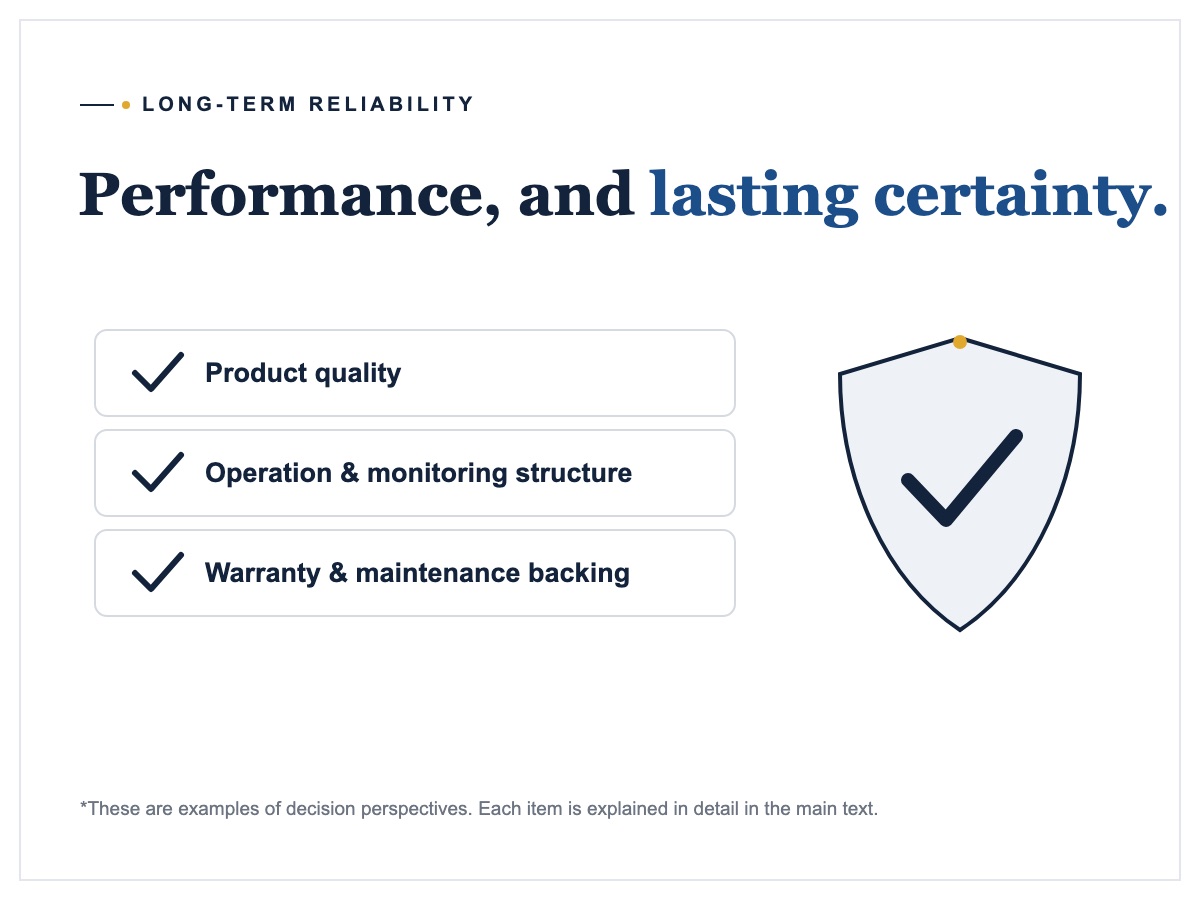
Rather than lining up certification names and warranty years, check what is covered, who is responsible, and how recovery works when something fails.
Check the enclosure, cells, detection, extinguishing, clearances, measures against fire spread, and the assumptions for fire service consultations against the equipment configuration and site conditions.
Check the BMS control, cell variation, temperature management, charge and discharge conditions, and how the capacity warranty is measured and what it excludes.
Check the division of responsibility for remote access, access rights, updates, logs, vulnerability response and links to external systems.
Make the monitoring scope, reception hours, first-line diagnosis, parts supply, on-site response, recovery targets and who bears the cost clear in the contract.
06 / REVIX SUPPORT
Starting from your candidate site and business objective, REVIX JAPAN sorts out the issues around grid, equipment, construction and operation. Even before the model or capacity is decided, we make clear what to check next.
07 / FAQ
08 / NEXT STEP
START WITH A FEASIBILITY CHECK
You do not need to have the candidate site, grid documents and investment conditions all ready. From what is known today, we sort out what to check next.
* Depending on what you consult us about, we may ask for additional documents or need to check with the parties involved.