


As of when is the information?
Regulations and market rules are revised. We set out the publication and update dates of each article and the point in time of the information we referenced.

Creating success in grid-scale battery storage, together.
BESS NEWS / EDITORIAL POLICY
Right down to the assumptions behind each decision,
honestly and clearly.
BESS NEWS aims to create articles that let businesses, investors and landowners considering grid-scale battery storage (BESS) make decisions while checking where the information comes from and what it assumes.

WHY THIS POLICY
Regulations, markets, products and site conditions are updated, and the same term can rest on different assumptions. That is why BESS NEWS places importance not only on readability but also on evidence, scope of application and how up to date the information is.
Regulations and market rules are revised. We set out the publication and update dates of each article and the point in time of the information we referenced.
We give priority to primary sources from government agencies, market operators, transmission and distribution operators and others, and show where they come from in a way that can be checked.

EDITORIAL PRINCIPLES
Being easy to find in search, and being reliable as material for decisions. These are our standards for meeting both.

We cross-check primary sources and multiple documents, and organize the content so that facts, interpretations and outlooks are not confused.
We show the evidence, assumptions, update dates, supervision and interview cooperation, and whether content is advertising or PR, in a way that is easy to see.
Even on topics related to our own services, we do not leave out conditions, risks or other options.
We go beyond explaining technical terms and point readers to the documents to check next and where to ask for advice.
SOURCES & EVIDENCE
We do not give every document the same weight. Depending on the topic, we check reliability, how up to date it is and any conflicts of interest.
Laws, regulations and official notices, and materials published by public bodies, market operators, general transmission and distribution operators and others
Specifications, reports and announcements published by manufacturers, businesses, research institutes and industry associations
Interviews with, or contributions from, experts, practitioners and businesses. Their position and the scope of their check are stated
News reports, explanations of research papers, private-sector surveys and similar. Used as a supplement after checking consistency with primary sources
On figures, revenue, prices, warranties and regulatory requirements
For information that varies with conditions, we avoid definitive statements and expressions of guarantee, and we state the calculation assumptions, the point in time covered and the need for individual checking. If regulations are revised after publication, we update the article or add a note.
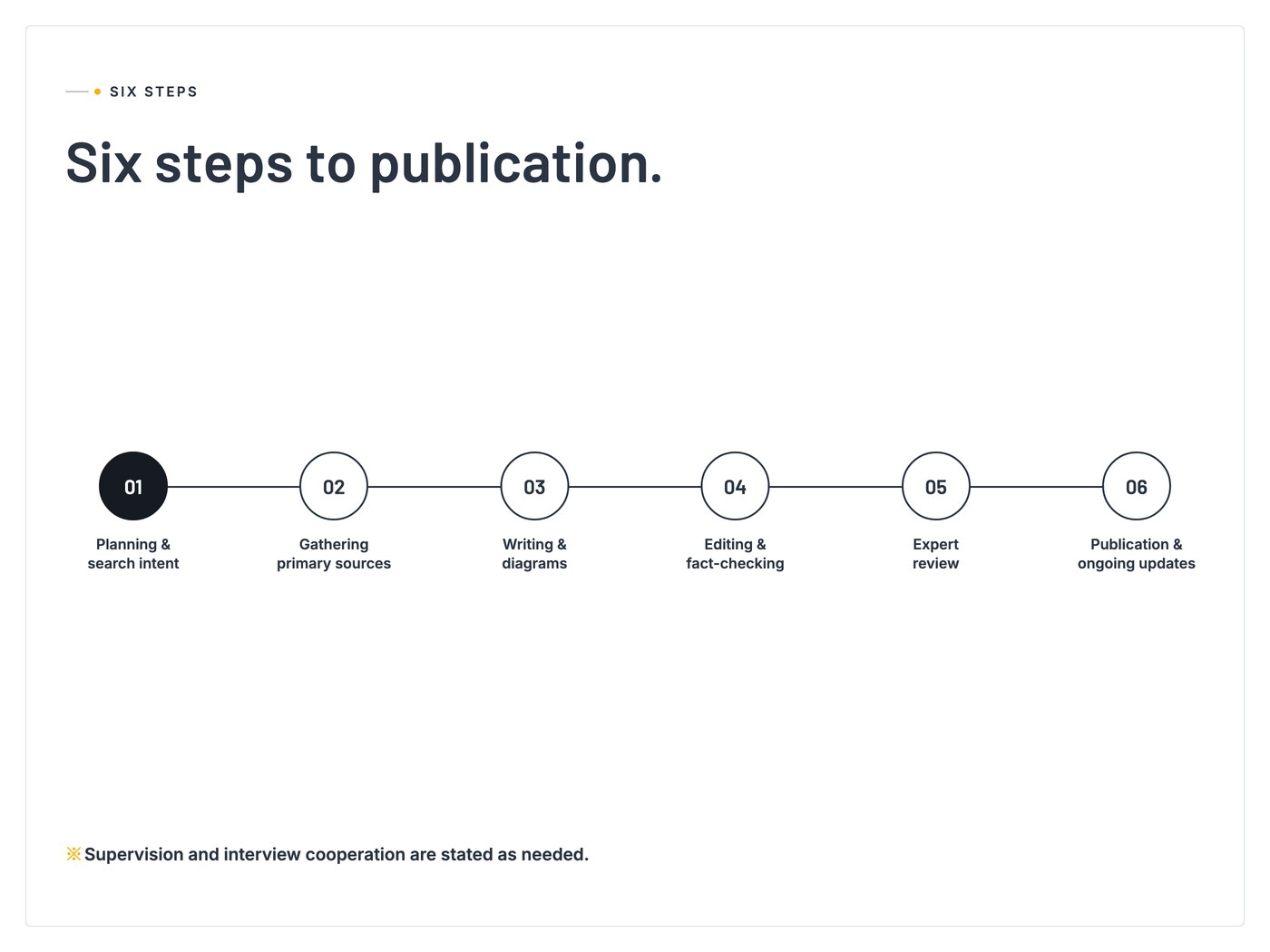
PUBLISHING PROCESS
We adjust the steps according to the importance and urgency of each topic, and our editorial work includes updates after publication.
We define the reader's questions and the issues needed for a decision.
We check the issuer, publication date, period of application and revision history.
We separate facts from interpretation and translate technical terms into the reader's own words.
We check the evidence, figures, links, notes and any expressions that could mislead.
We set the scope of review according to the topic, such as technology, legal matters or regulations.
When we learn of a revision or an error, we review the content and the update notice.
REVIEW & SUPERVISION
Rather than showing reliability through job titles alone, we aim for labels that let readers understand the scope of the check and each person's involvement in the article.
*We publish the names, affiliations and scope of review of supervisors and contributors only where the individuals and their organizations have given permission.

CORRECTIONS & CONFLICTS
Rather than claiming there will never be errors, we set out how we show readers errors and conflicts of interest when we become aware of them.
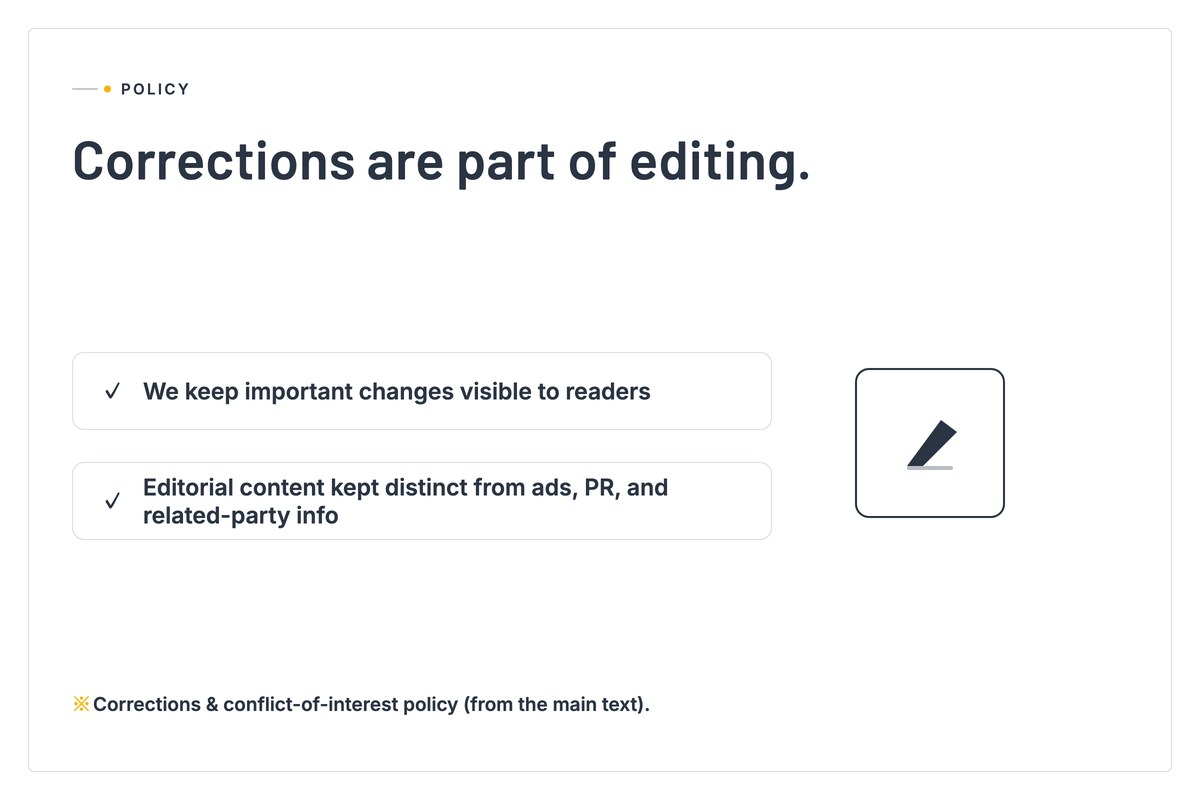
BESS NEWS is run by REVIX JAPAN. Even when we cover content related to our own services, clients, partners or advertisers, we do not leave out the conditions and risks readers need for their decisions.
FROM POLICY TO PRACTICE
We publish articles matched to each stage of consideration, covering regulations, markets, technology, land and more.
Not only adding information,
but raising the quality of decisions.
OPERATOR
BESS NEWS is a REVIX JAPAN media outlet that organizes information on the grid-scale battery storage (BESS) business from the point of view of those considering it.
Legally required information such as the formal company name, address and representative is checked for consistency with the company information page before publication.
See company informationNEXT STEP
After checking the basics in our articles, you can move on to the service and assessment pages that match what you are considering.
Check the starting points for land use and business planning
HIGH VOLTAGECheck how MW-class projects work and the products
LANDCheck the information you need to decide on selling, entrusting or DD
ABOUT BESS NEWSCheck the purpose of the media outlet and the value it offers
FAQ
BESS NEWS is a media outlet run by REVIX JAPAN that covers grid-scale battery storage (BESS), power markets and regulations. Our formal corporate information is provided on the company information page.
We give priority to primary sources such as laws and regulations and materials from government agencies, market operators and transmission and distribution operators. Where necessary, we combine them with official company materials and interviews with experts and practitioners.
For highly specialized or high-risk topics, our policy is to have experts and practitioners check the content as needed, and to state the supervisor name and the scope of the check in the article.
We check the content and make any necessary corrections or additions. Our policy is to show important changes in the article in a way that makes the update date and the details of the correction clear.
We may introduce our own services or partners. Our policy is to label editorial articles, advertising and PR, and information in which we have an interest, so that readers can tell them apart.
Please contact us through the BESS NEWS inquiry desk. We review the details and consider each case individually, based on our editorial policy and its usefulness to readers.

CONTACT BESS NEWS
Please send us primary information, case studies and expert knowledge about grid-scale battery storage (BESS). We cannot promise publication, but we review what you send in line with our editorial policy.