Creating success in grid-scale battery storage, together.

For investors and business partners

Site Requirements &
Documents

Before an investment decision, we set out the points to check for the site, the grid, the equipment and the rights. Even before your documents are ready, you can consult us about what to check next.

  • You can consult us with the location alone
  • We sort out the missing documents
  • This does not guarantee that the project will go ahead
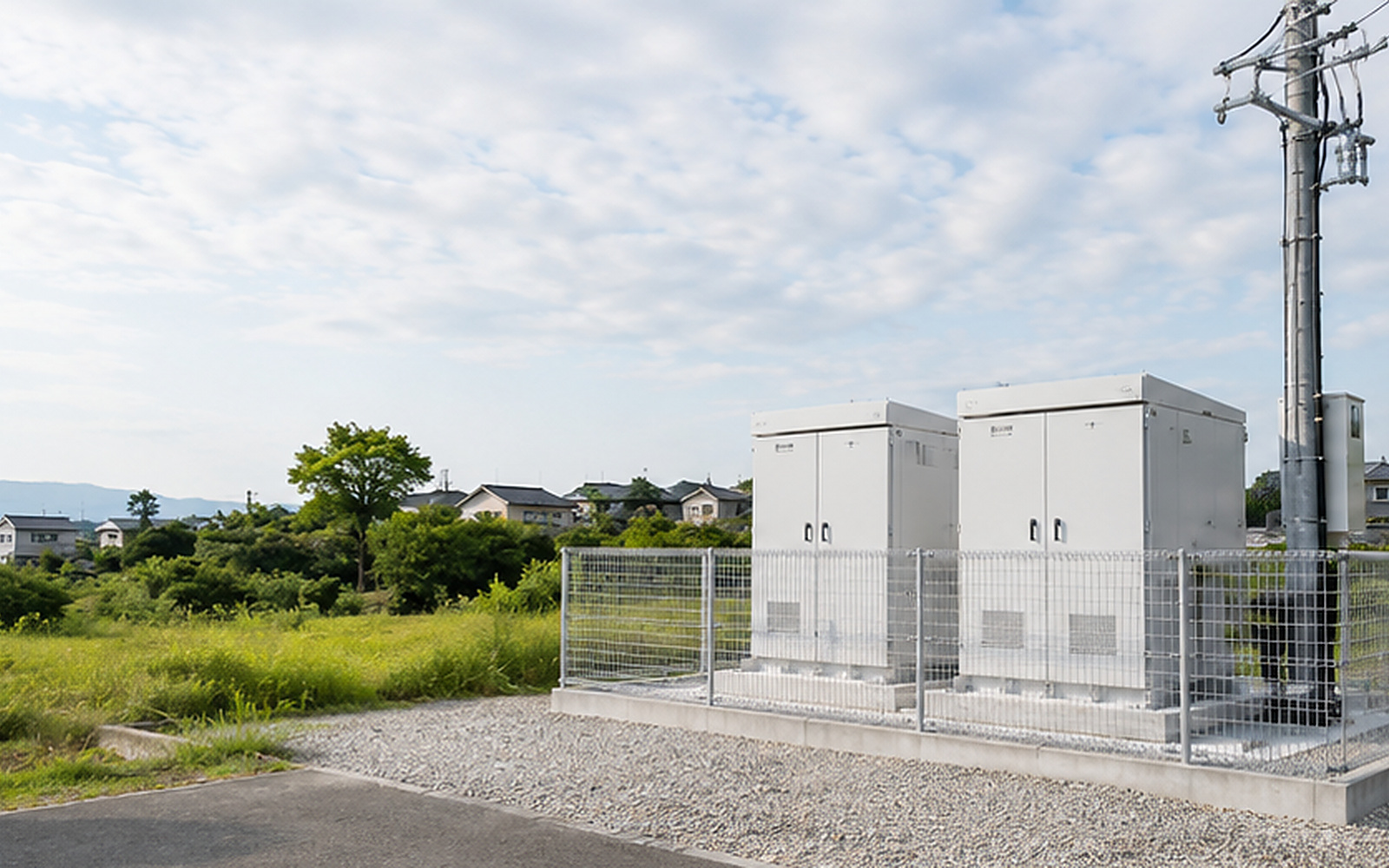
White low-voltage battery storage equipment installed in a suburb in Japan
4 areas checked
at the same time

The 4 areas to check first

  1. 01Site
  2. 02Grid
  3. 03Equipment
  4. 04Rights & documents

CONDITIONS

“Land where it fits” alone
does not make an investment project.

Even if there is space for the equipment, the economics and the schedule cannot be fixed while any of the grid conditions, the constructability or the rights remain unconfirmed. It is important to check the 4 areas in parallel.

01

Site conditions

  • Room for the equipment, clearances and maintenance access can be secured
  • Construction and maintenance vehicles can get in
  • Foundations, drainage and disaster risk can be checked
02

Grid conditions

  • It can be studied under the charge and discharge conditions you want
  • The connection point, scope of work and cost can be confirmed
  • Operating constraints and the construction period can be reflected in the economics
03

Equipment conditions

  • The specifications of the batteries, PCS and protection devices are in place
  • Monitoring, communications and the response to shutdowns can be designed
  • Electrical safety, fire prevention and upkeep conditions can be checked
04

Rights & documents

  • You can explain whether the land is owned, leased or to be acquired
  • The applicant and the authority to sign contracts are clear
  • Drawings, specifications and supporting documents are gathered step by step

Assumptions for the decision

The above are general areas to check. The formal requirements, the documents to submit, notifications and construction conditions differ with the regional general transmission and distribution operator, the municipality, the equipment specifications and the contract scheme.

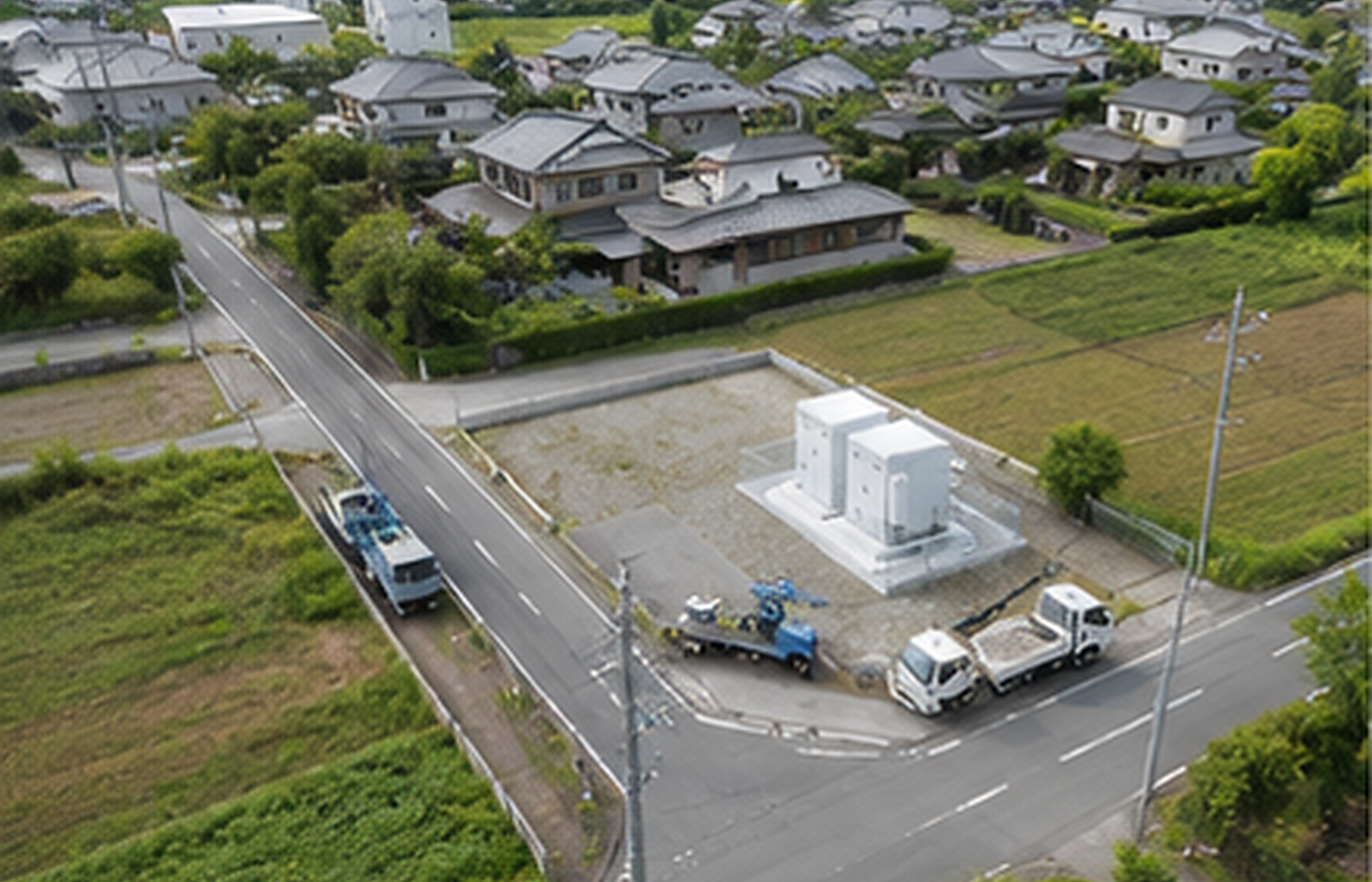
The position of a candidate battery storage site relative to the surrounding roads and distribution equipment

SITE CHECK

From the location information,
set the order of the checks.

At the early stage, sorting out “where, at what scale, roughly when and who wants to go ahead” comes before perfect application documents. If on-site photos, a map, the lot number and the status of the rights are known, it becomes easier to separate out the surveys needed next.

Minimum information
Location / lot number, expected scale, preferred timing, status of the land rights
Helpful documents
On-site photos, a map, a survey drawing, existing equipment, information on the road and the incoming line route

COMMON PITFALLS

3 oversights that delay an investment decision

The earlier the issues are found, the easier it is to avoid unnecessary redoing of design and contracts.

01

A nearby distribution line does not
mean connection is possible

It only becomes material for a decision once the available capacity, the impact when charging, protection coordination and the scope of work have been checked.

02

Enough area does not
mean it can be built

The on-site conditions need to be checked, including road frontage, delivery, foundations, drainage, the neighbors and maintenance access routes.

03

The equipment price alone
cannot decide profitability

We reflect the grid connection work, operating constraints, maintenance, contract terms and schedule in the economics.

It is fine before your documents are ready

From the information you have now, we sort out the missing items and the next step.

CONSULTATION

What a consultation tells you

Rather than giving an instant “yes or no,” we sort out the information needed for an investment decision stage by stage.

  1. 01

    Confirmed and unconfirmed conditions

    We make the current situation visible across the 4 areas of site, grid, equipment and rights.

  2. 02

    Documents to obtain first

    We set priorities for each stage: the initial consultation, the contract application to the utility, and the contract and construction.

  3. 03

    Next procedures and routes to consider

    We make clear the next action that suits the project, such as a preliminary consultation, sorting out the specifications or checking the rights.

An investor and a staff member reviewing documents for a battery storage project
INPUT Location, expected scale, preferred timing OUTPUT Missing documents, priority surveys, next procedures

DOCUMENTS

Required documents are gathered
stage by stage.

You do not need to gather everything from the start. A checklist by stage (initial consultation → contract application to the utility → contract, design and construction) is on a dedicated page.

For the initial consultation, start with “the location, the current condition and the approximate area”Documents for the contract application and contract stages are explained individually for each project

Stage-by-stage checklist of required documentsSee what to submit, when and why, listed stage by stage

See the required documents page →

PROCESS

From consultation to the decision to go ahead

We raise the accuracy of the checks step by step, according to the documents you have.

  1. 01

    Share information

    Share the location, scale, preferred timing and status of the rights

  2. 02

    Initial sorting

    Sort out what is confirmed and unconfirmed across the 4 areas

  3. 03

    Gather documents

    Prepare drawings, specifications and rights documents in order of priority

  4. 04

    Technical and contract checks

    Make the grid, design, legal and electrical safety conditions concrete

  5. 05

    Investment decision

    Decide based on the cost, construction period, constraints and operating structure

ALTERNATIVES

Even if the current conditions are difficult,
there is more than one route to consider.

Before ruling a project out, we separate the conditions that can change from those that cannot.

Change the candidate site

We review the location conditions that affect viability, such as road frontage, disaster risk and grid conditions.

Review the scale and specifications

Changing the output, capacity, layout or operating conditions may change whether the project can work.

Review the schedule

We adjust the order of the grid connection work, rights acquisition and permits to limit rework.

Reorganize the structure and roles

Missing roles, such as equipment, land, operation or funding, are filled through partnerships.

FAQ

FAQ on site requirements
and documents

We answer questions you may have before your study, focusing on items where the decision changes case by case.

A

It cannot be judged by a single nationwide area alone. In addition to the equipment itself, we check case by case, including maintenance access routes, clearances, foundations, fences, the incoming line route and access for construction vehicles.

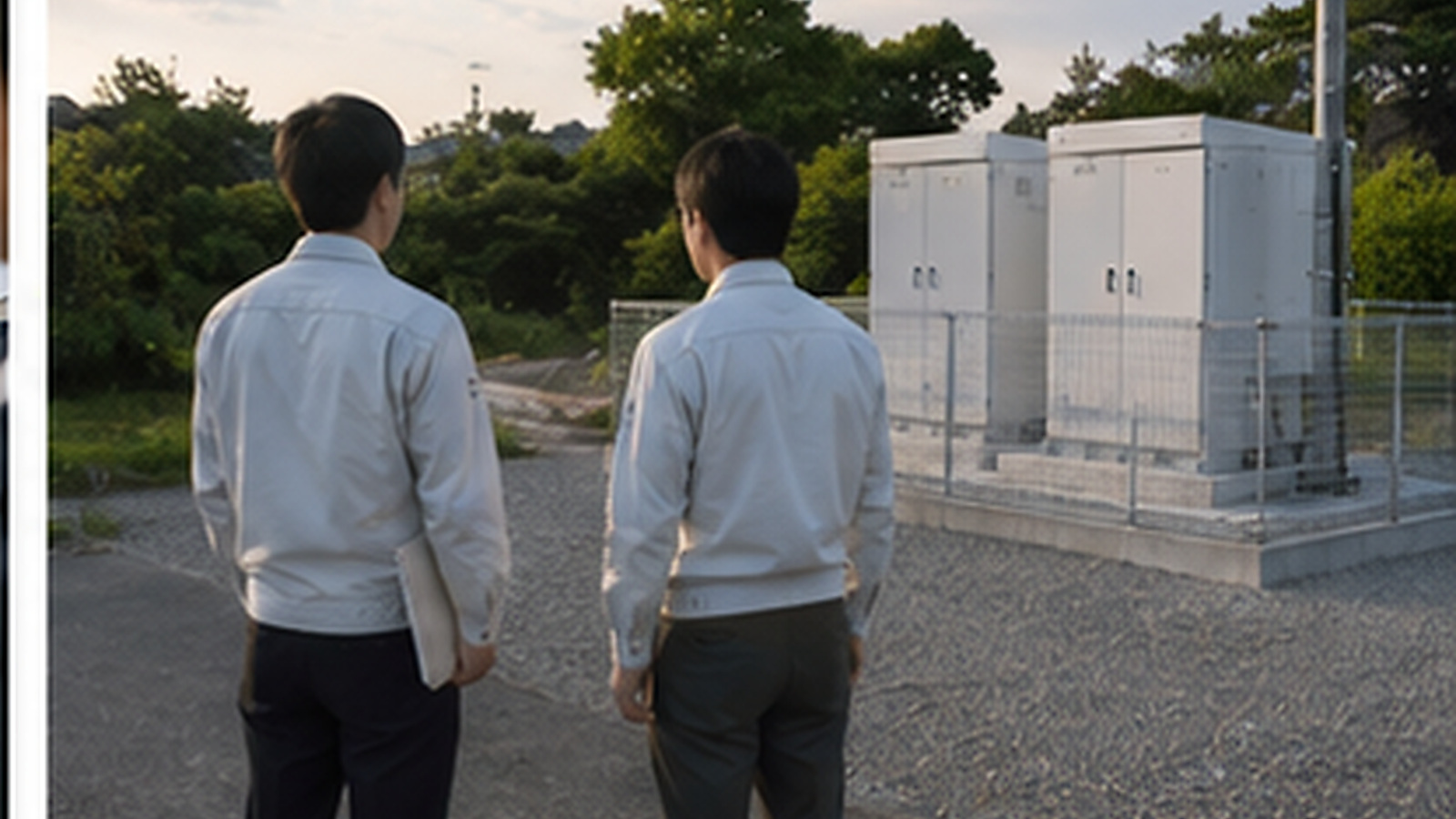
A staff member checking a candidate battery storage site on site

PROJECT CHECK

Even with the location alone,
the first checks can begin.

If you share your project conditions, we sort out the 4 areas to check, the missing documents and the next procedures.

A consultation or a request for materials does not guarantee profitability, whether connection is possible, or that the project will go ahead.

Free consultation on project conditions