


01
Additional CAPEX
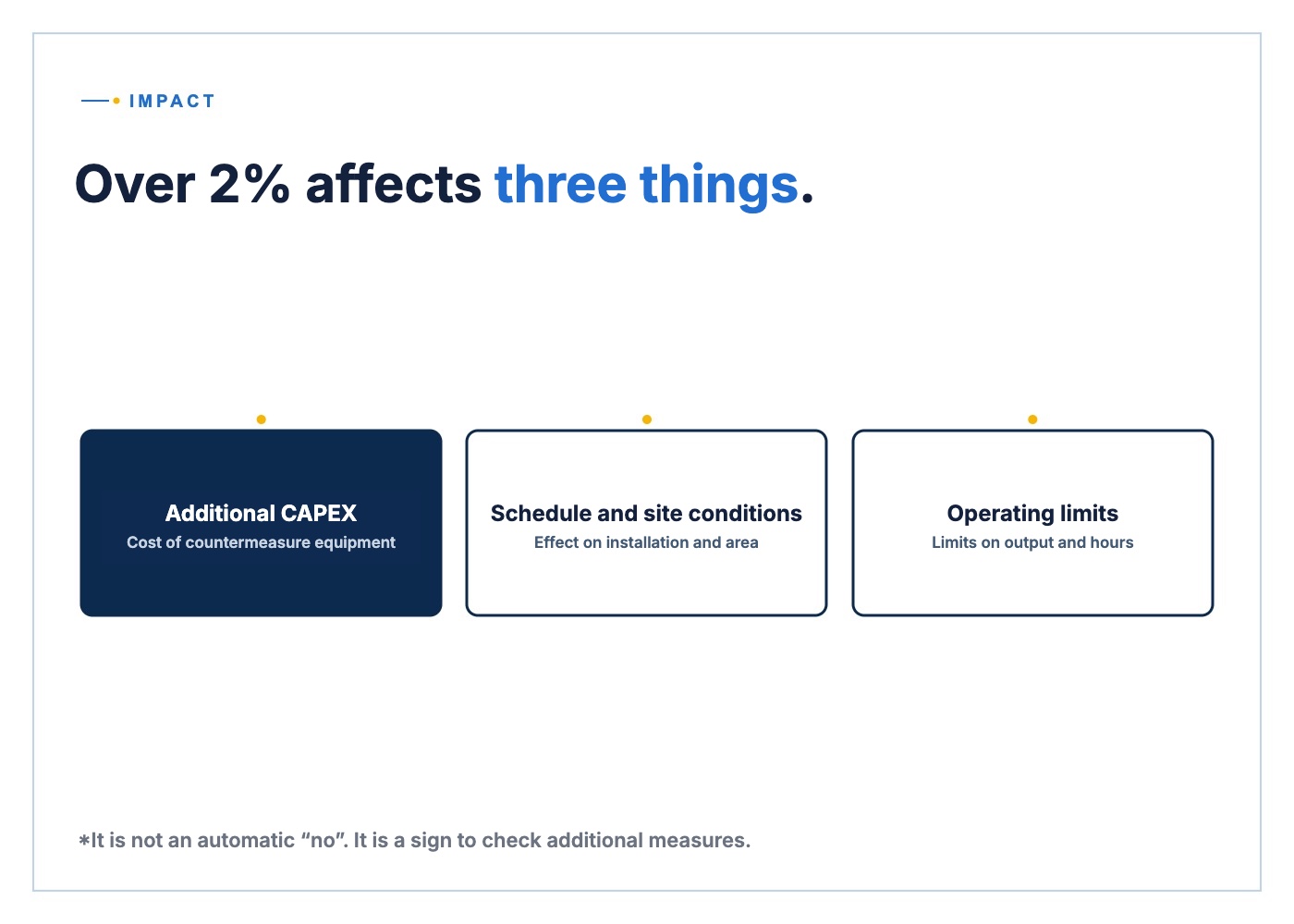
Reactive power control, changes to the transformer specifications and studying options such as an SVC or STATCOM may increase the costs of equipment, design, construction and testing.

Creating success in grid-scale battery storage, together.

READING THE RESPONSE: VOLTAGE
At first glance it may look as though “it can be connected”, but additional equipment, operating conditions or renewed consultation can change the project’s viability. Before you buy, we read the response down to its small conditions.
* This page provides general information to support your decisions. Connection conditions differ depending on the response and individual consultation with the general transmission and distribution operator.
CONCLUSION
If the response indicates that the voltage fluctuation at the connection point may exceed 2%, check whether countermeasures are needed, who carries them out, the cost, the schedule and the operating conditions. It is important not to jump to conclusions about whether connection is possible or about the additional cost from the entry alone.
BUY BEFORE CHECK
Do not judge it a “cheap project”
on the grid connection construction cost alone.
VOLTAGE RANGE
Charging and discharging the batteries, and connecting equipment to and disconnecting it from the grid, raise and lower the voltage at the connection point. If the response indicates that the range of fluctuation may exceed 2%, you may need to look at control on the equipment side, additional devices, operating conditions and so on.
THREE IMPACTS
01
Reactive power control, changes to the transformer specifications and studying options such as an SVC or STATCOM may increase the costs of equipment, design, construction and testing.
02
Equipment selection, recalculation, checks with manufacturers, consultation with the general T&D operator and securing space for additional equipment may affect the schedule.
03
If conditions are attached on charge and discharge output, power factor, connection and disconnection, control mode and so on, you need to recheck the planned operation and the revenue assumptions.
ANSWER SHEET CHECK
Check the scenario it applies to, such as charging or discharging, connection or disconnection, or maximum output.
Check the division of responsibility: the general T&D operator’s side or the developer’s equipment.
Check whether the costs of additional countermeasure equipment, design and testing are included.
Check that requirements such as power factor, reactive power and constant-voltage control match the PCS specifications.
Check the panels, transformers, compensation devices, maintenance access routes and clearances.
Check whether analysis submissions, manufacturer studies, on-site tests and the like are needed.
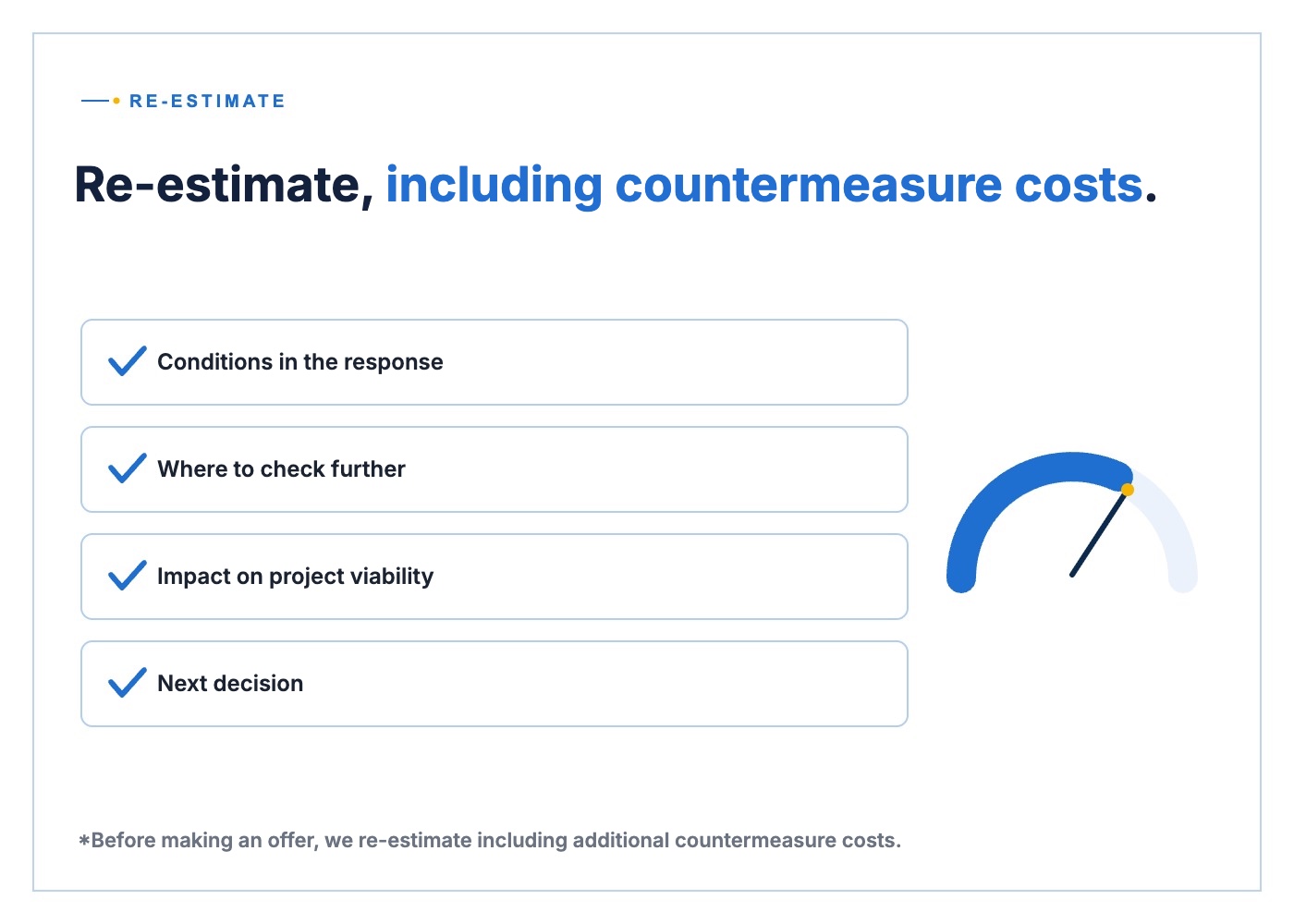
Re-estimate project viability on the basis of additional CAPEX, the schedule and operating limits.
BEFORE PURCHASE
If you share the response, the single-line diagram and the equipment specifications, we will sort out the issues that are easy to overlook and where to check next.
See what the free DD assessment covers
FREE DESK DUE DILIGENCE
We pick out key entries such as voltage fluctuation, special measures, the construction period and the grid connection construction cost.
Matters to check with the transmission and distribution operator, PCS and transformer manufacturers, and design firms.
Issues for reflecting additional CAPEX, the schedule and operating conditions in the finances.
Options such as continuing with the purchase, negotiating terms, getting additional quotations or renewed consultation.
* This is a preliminary review based on desk research, public information and the documents you provide. It is not a design guarantee or a commitment on whether connection is possible, and it does not replace the formal judgment of the general T&D operator.
DOCUMENTS & FLOW
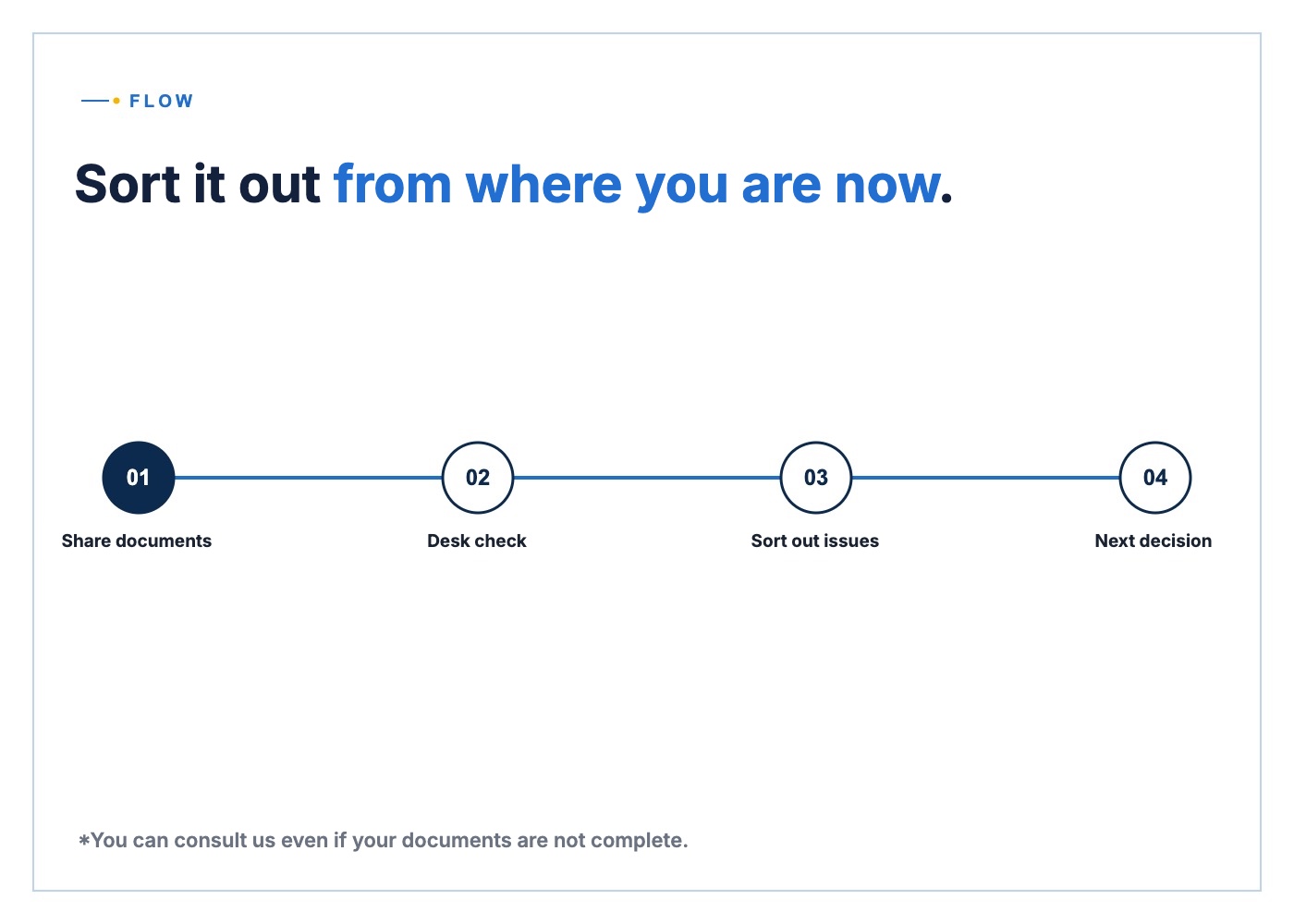
Only the documents you have at hand are fine.
We cross-check the response conditions against the equipment and site conditions.
We make the additional cost, the schedule and where to check visible.
We sort out the options of buying, selling or renewed consultation.
FAQ
It does not necessarily mean that connection is ruled out straight away. However, equipment countermeasures to limit the voltage fluctuation, control conditions or additional consultation may be needed. Check the relevant part of the response and its assumptions individually.
Not necessarily. Countermeasures required as equipment on the developer’s side may incur costs for design, equipment, construction and testing separately from the grid connection construction cost. It is important to separate out what each quotation covers.
Not necessarily. We consider several options, including reactive power control by the PCS, the transformer specifications and the operating conditions, according to the grid conditions and the requirements in the response. Whether equipment is needed is decided through individual consultation and design studies.
It sometimes cannot be fixed from the response alone. We carry out a technical study together with the single-line diagram, the PCS and transformer specifications, the output conditions, information on the connection point and so on, and check with manufacturers, design firms and the general transmission and distribution operator as needed.
Whether you are a seller, buyer, developer or broker, we sort out the issues according to the documents you have. If documents are missing, we start by checking the information you should obtain next.
Yes. However, the response or the results of an individual connection study are needed to formally confirm the conditions on voltage fluctuation. Based on the site conditions and the current status of your application, we will tell you which items to check first.
FREE DIAGNOSIS
Voltage fluctuation over 2%, application of special measures, the grid connection construction cost, the construction period. We check the documents together and sort out your next move.